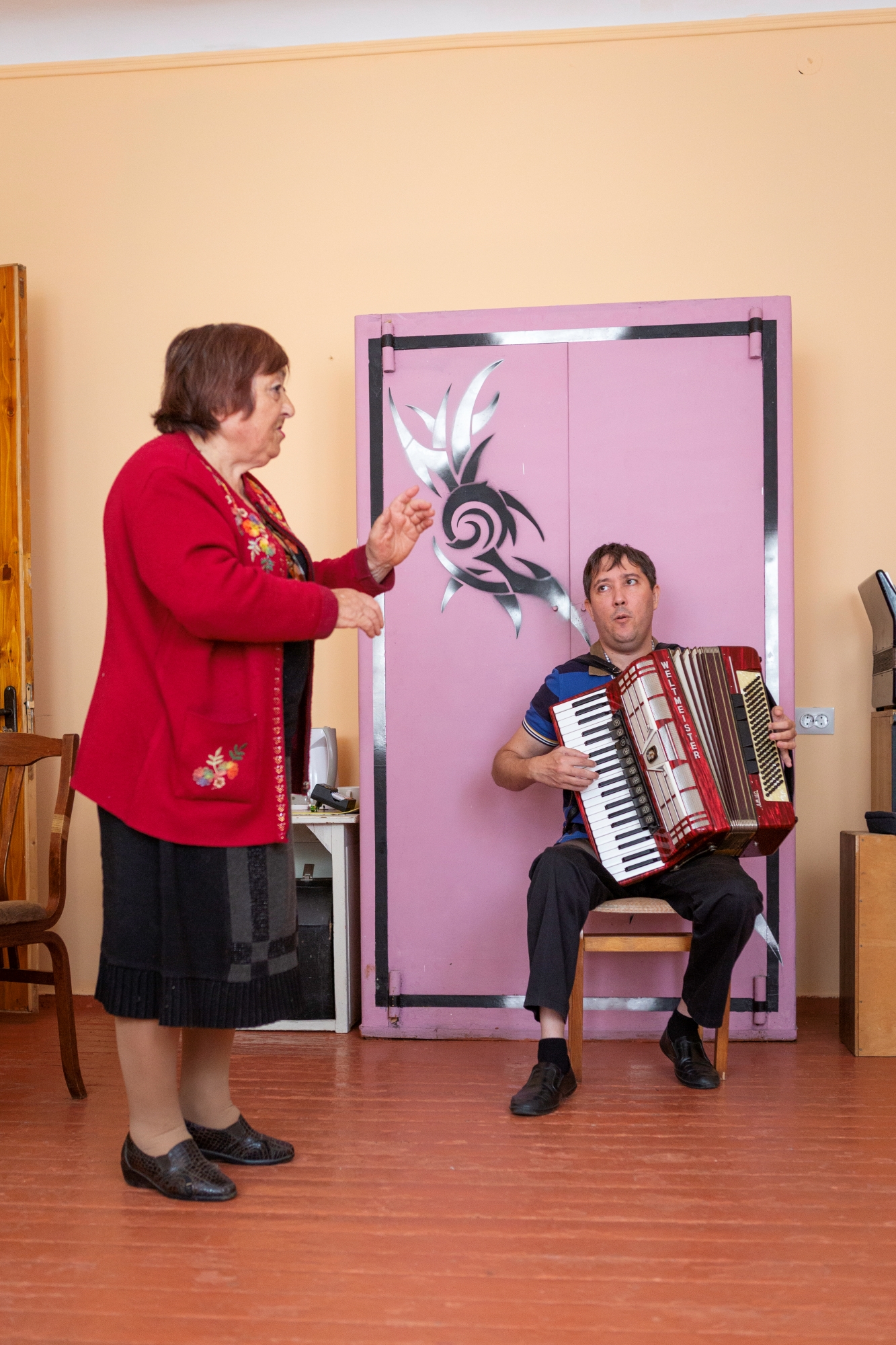
Bender. Interior of the House of Culture. A choir ensemble rehearses for the evening performance.
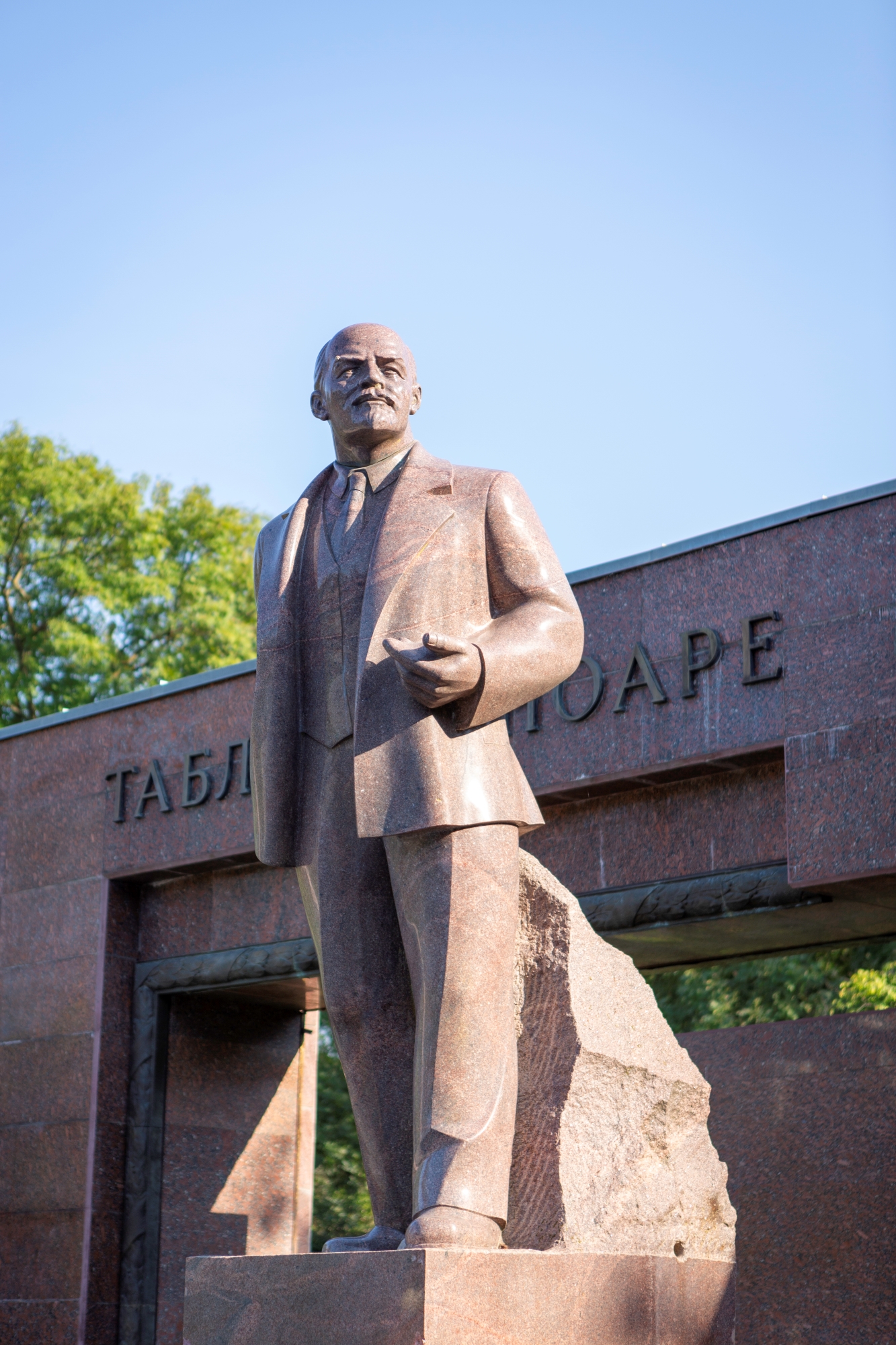
Chișinău. Lenin monument in the “Valea Morilor” park.
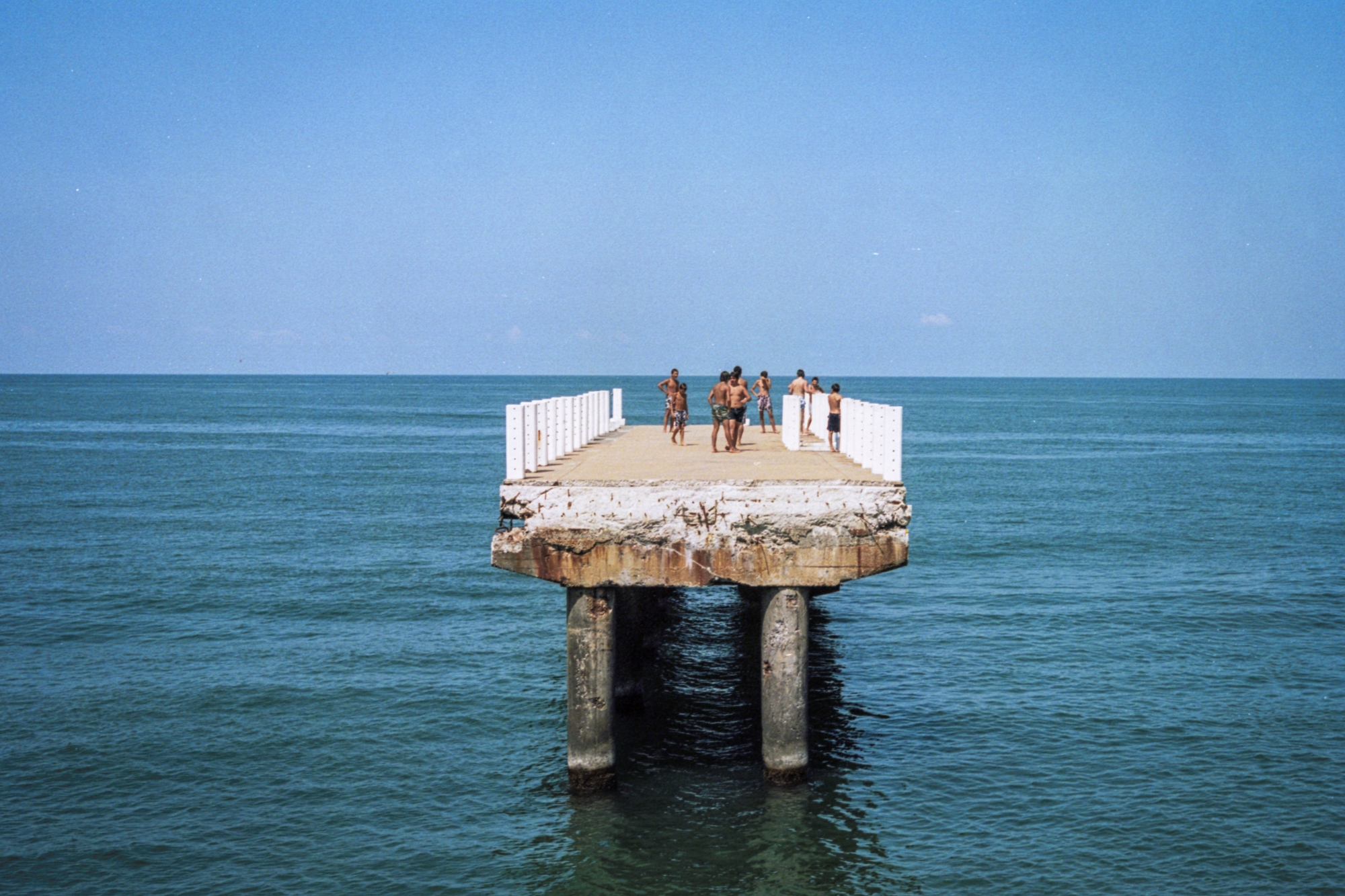
Batumi. The old abandoned pier.
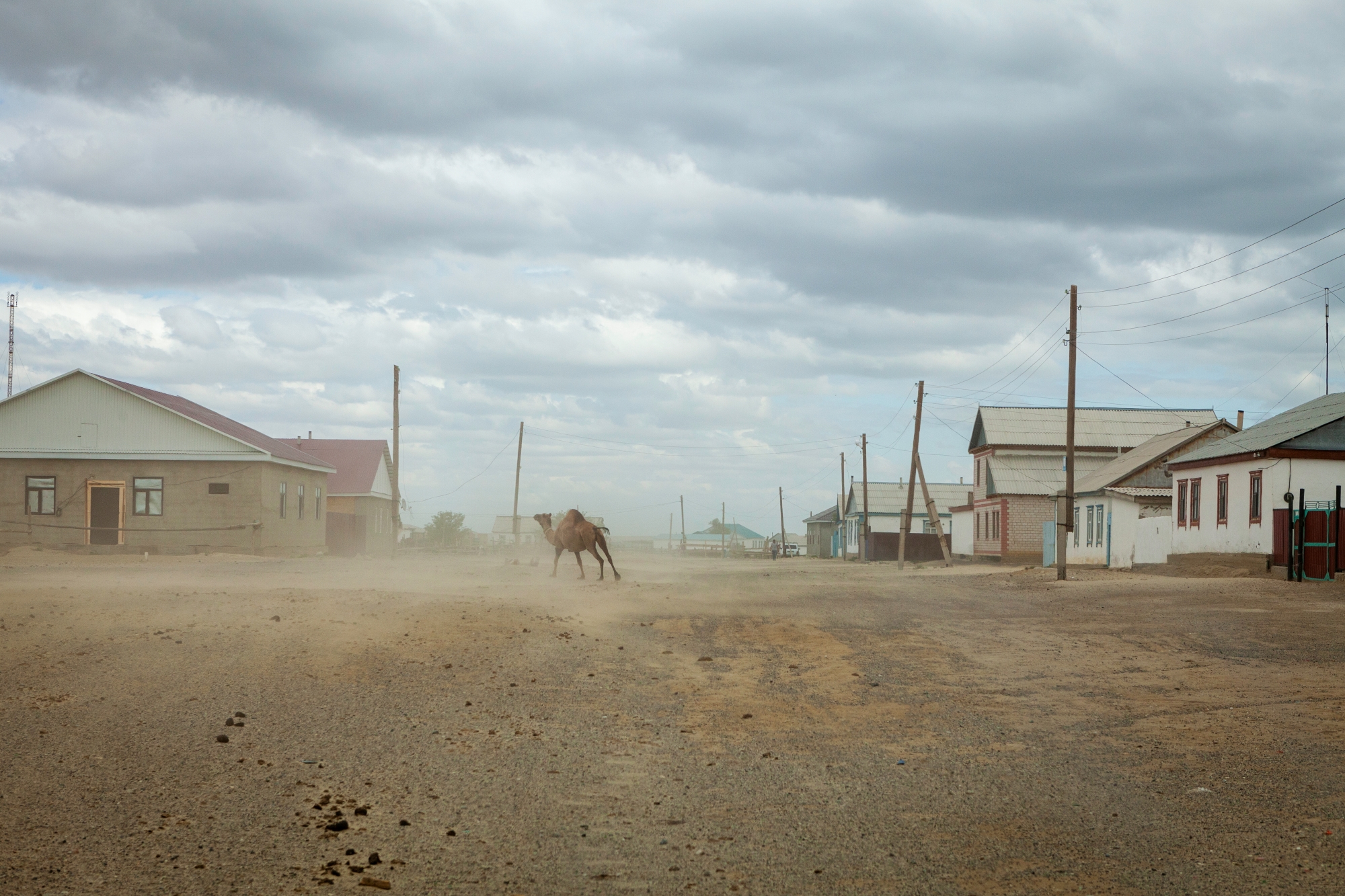
Zhalanash, once located on the shores of the lake, is now about 12 km away. It is battered by strong and frequent winds and periodic sandstorms.
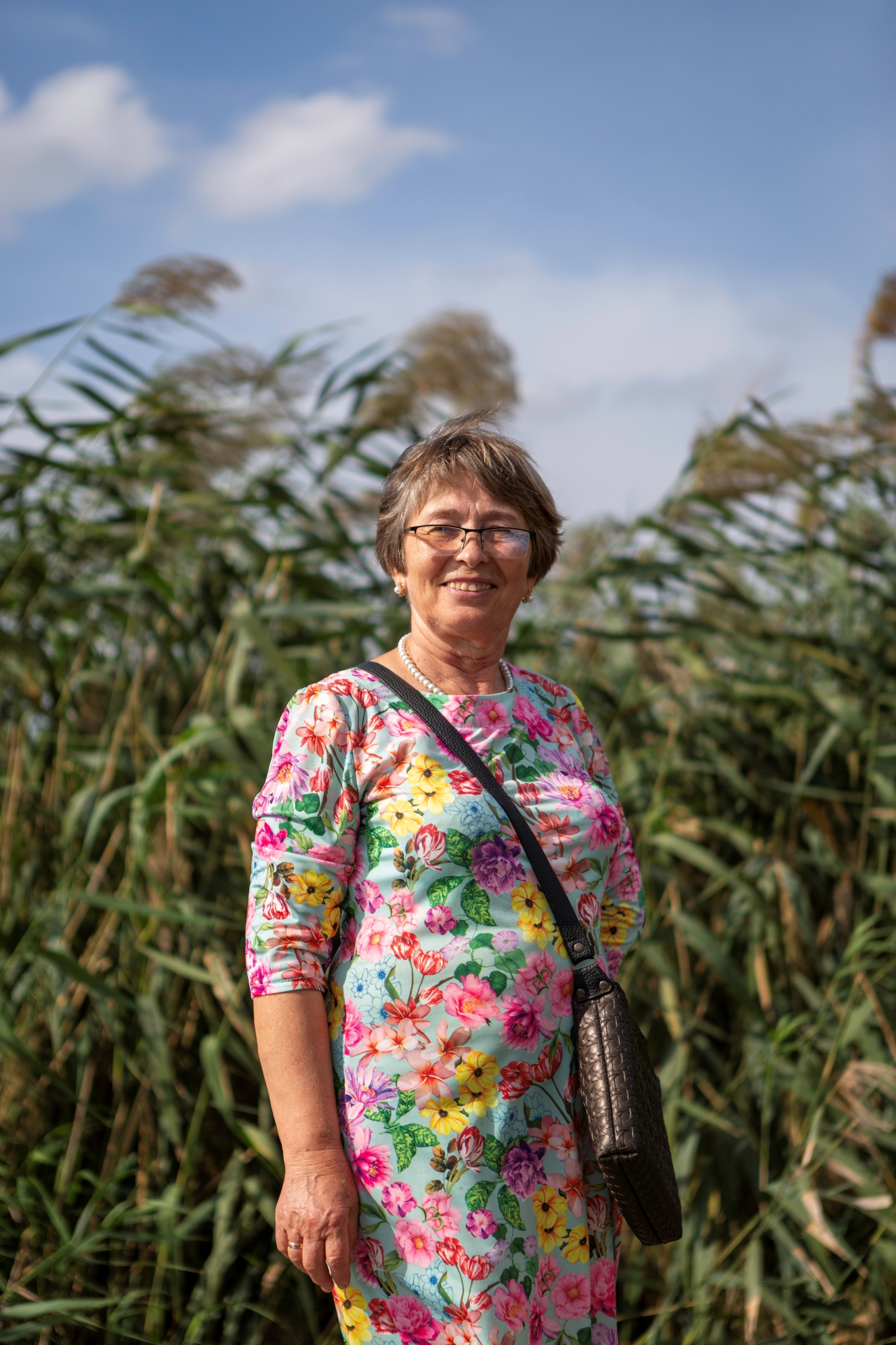
Goian. Eleonora runs, together with her husband Yuri, the agritourism guesthouse “Pajata.” Their three children have emigrated to Germany and Poland, leaving the large house almost empty. Youth emigration is a major issue both in Moldova and in Transnistria, despite strong economic growth.
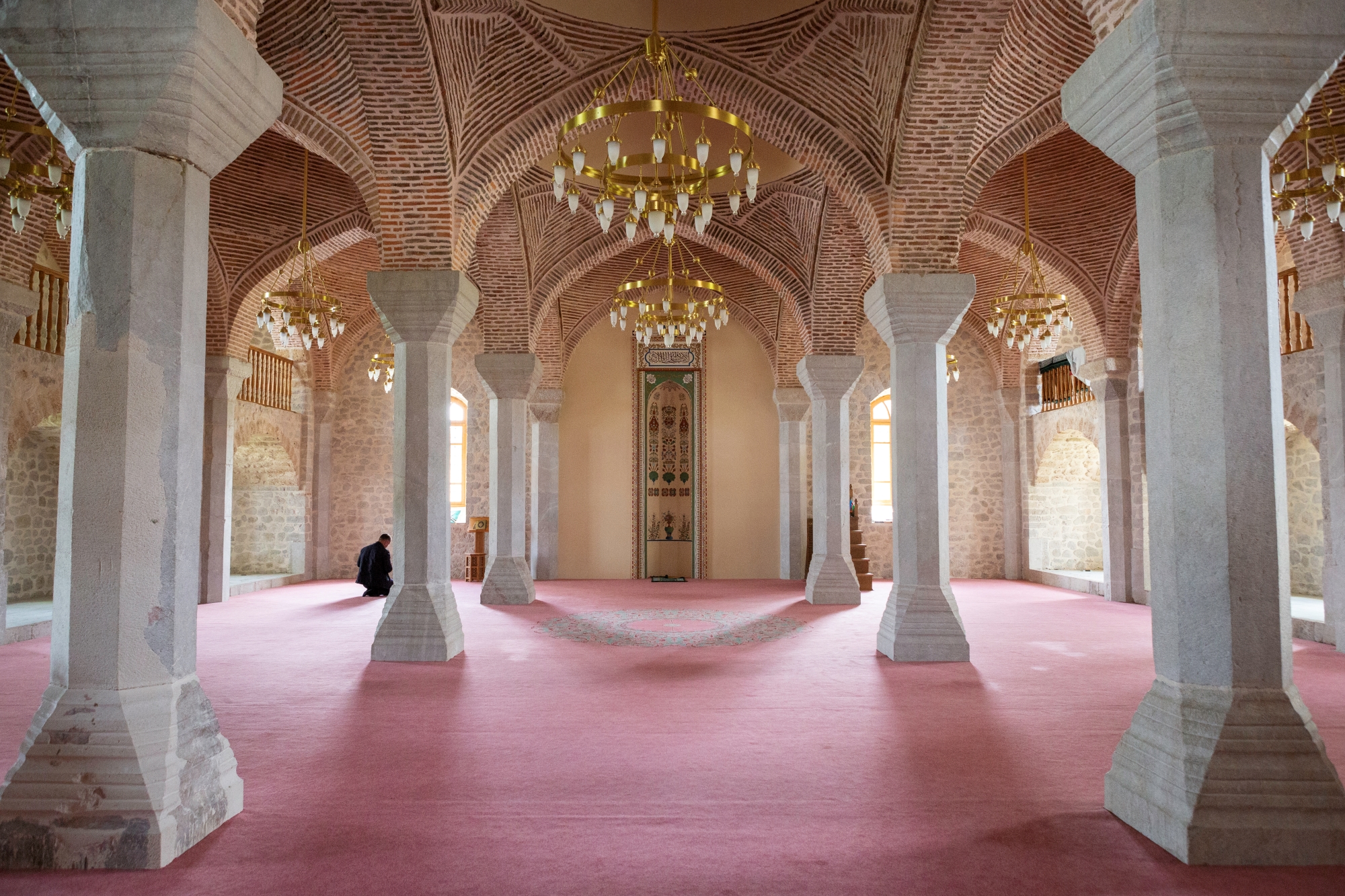
Shusha. The Yukhari Govhar Agha Mosque, recently restored after the reconquest of the city. It had remained abandoned for over 30 years.
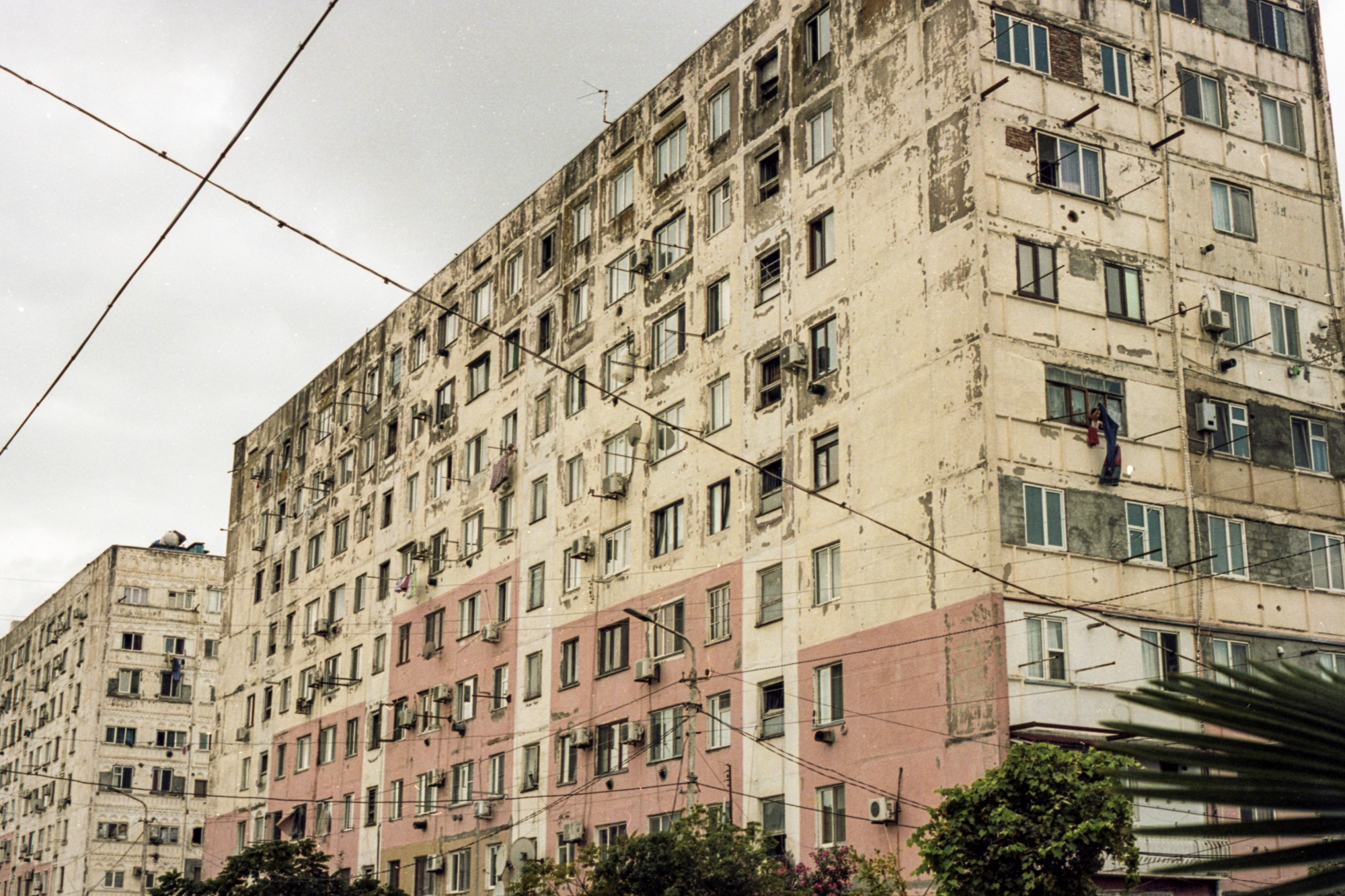
Kutaisi. Khrushchyovka buildings along the main street. Typical Soviet prefabricated buildings from the 1960s and 1970s, designed to meet the growing needs of the population. They contain basic utilities and offer mostly temporary solutions. Many are still in use today throughout the former USSR.
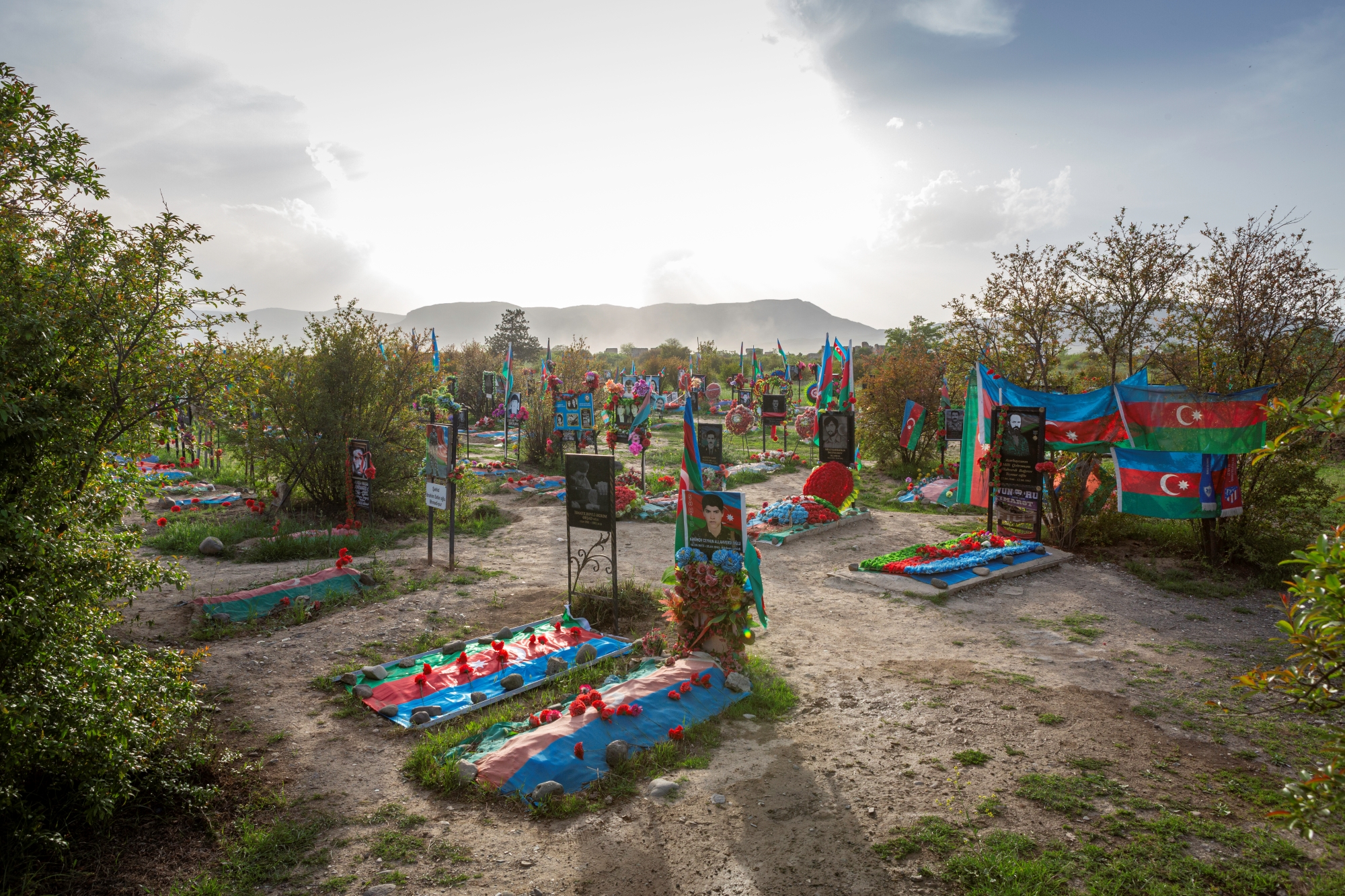
Agdam. The memorial to the victims of the First War. On the right are the graves of national heroes Alabbas Iskandarov and Allahverdi Bagirov.
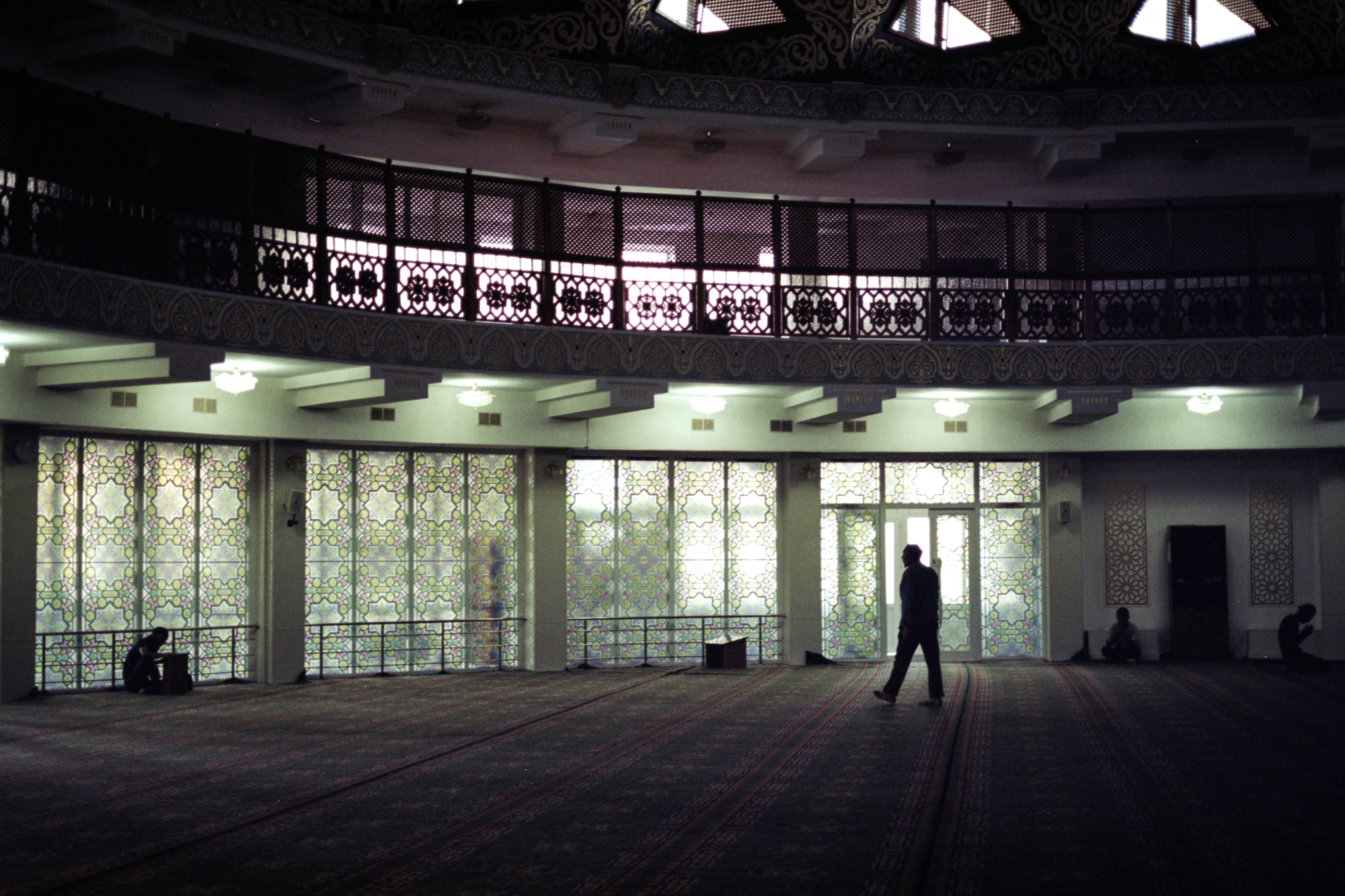
Pavlodar. Inside the Mashkhur Zhusup Mosque. Sunni Islam remains the main religion of the country, even if Christianity is also widely practiced, especially by descendants of settlers. During the Soviet Union, religious practice was strongly restricted.
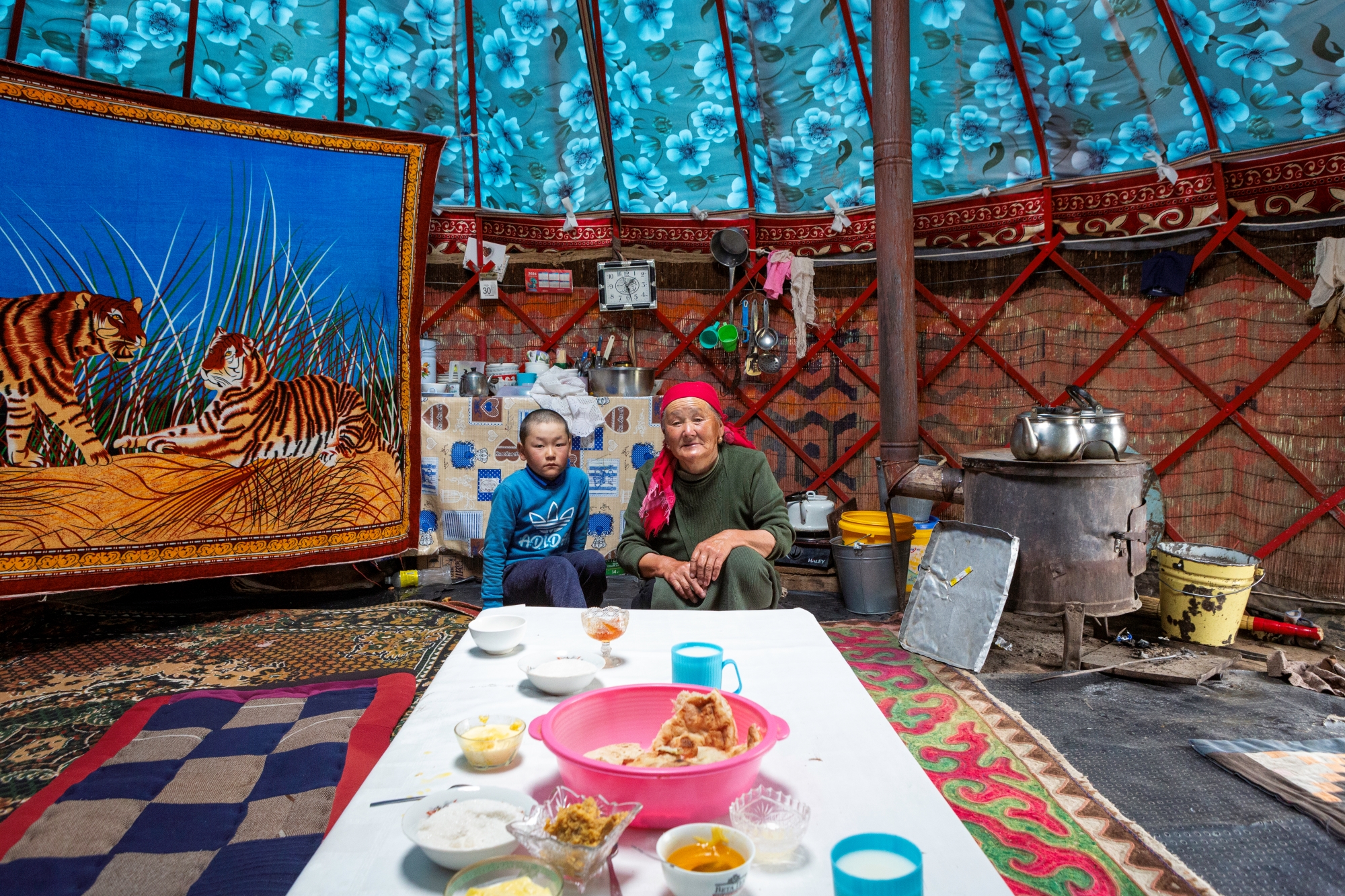
Torugar Pass, grandmother and grandson inside their yurt.
With traditional norms still present, the few upper-class yurts are only moved to the pastures during summer. The children usually stay in the yurts, while the parents are in the pastures.
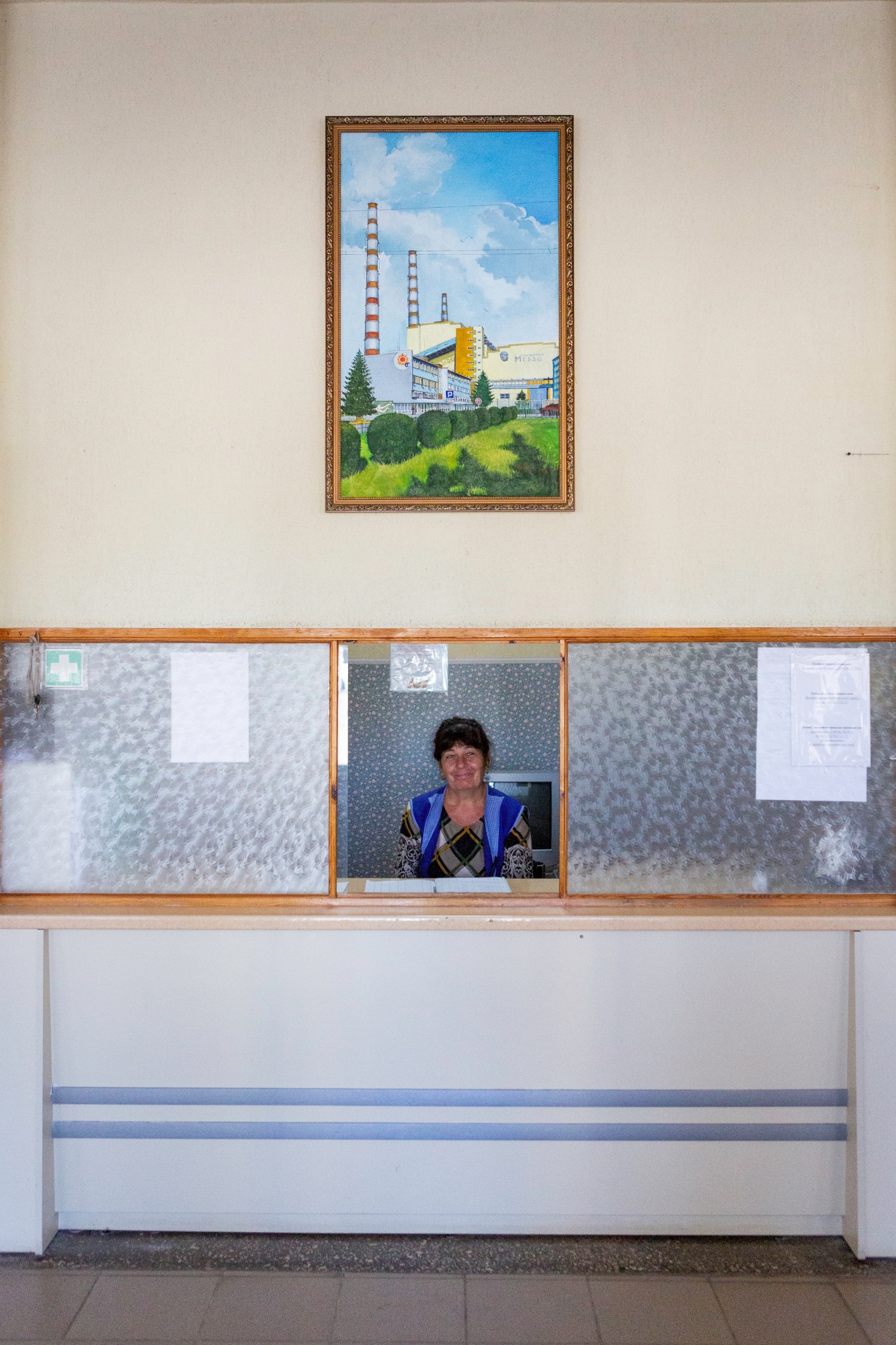
Dnestrovsk. Interior of the House of Culture. The painting celebrates the Cuciurgan power plant, located east of the city. The plant alone generates three quarters of Moldova’s total energy demand.
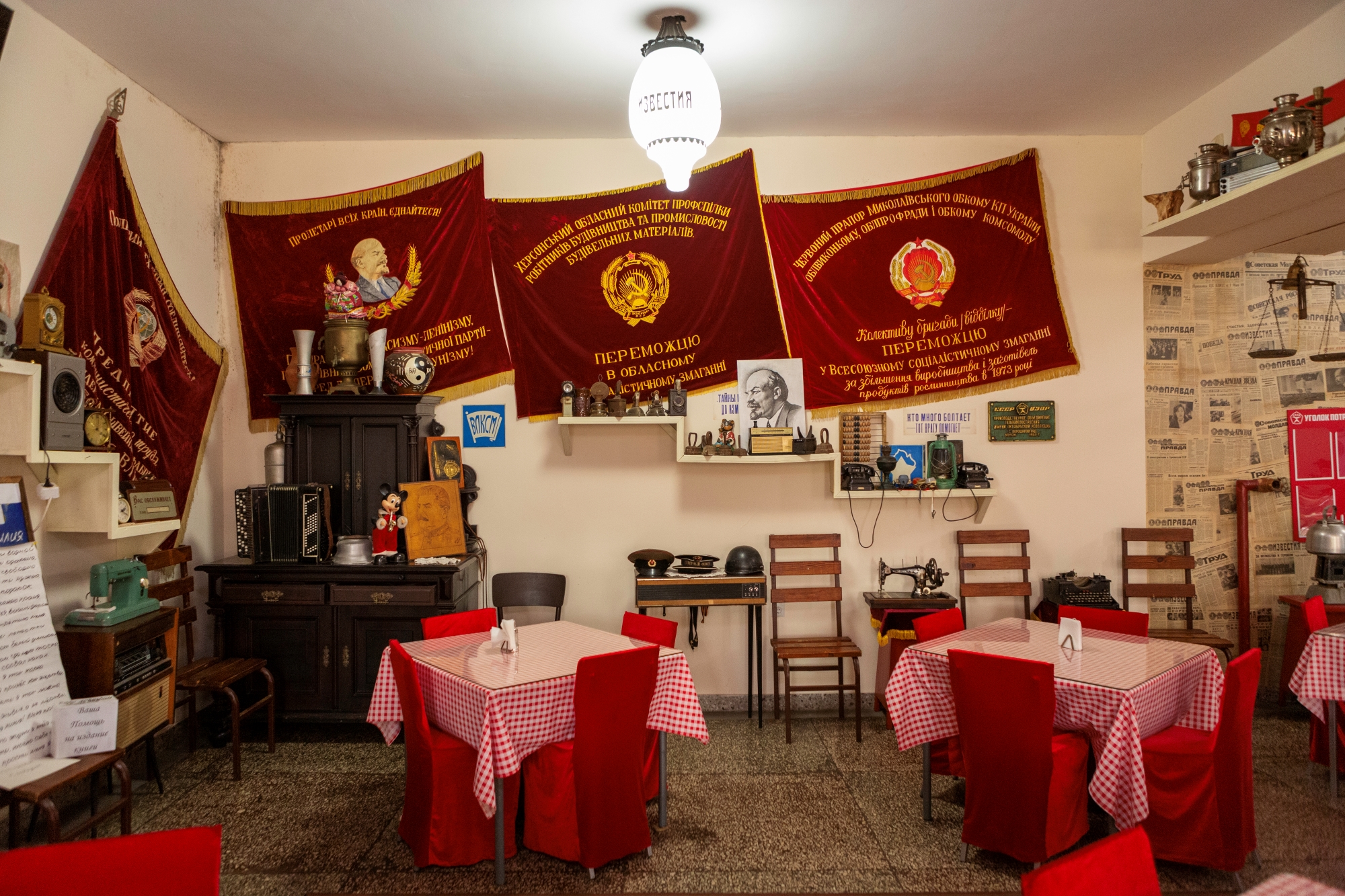
Bender. Interior of the Stolovka USSR canteen.
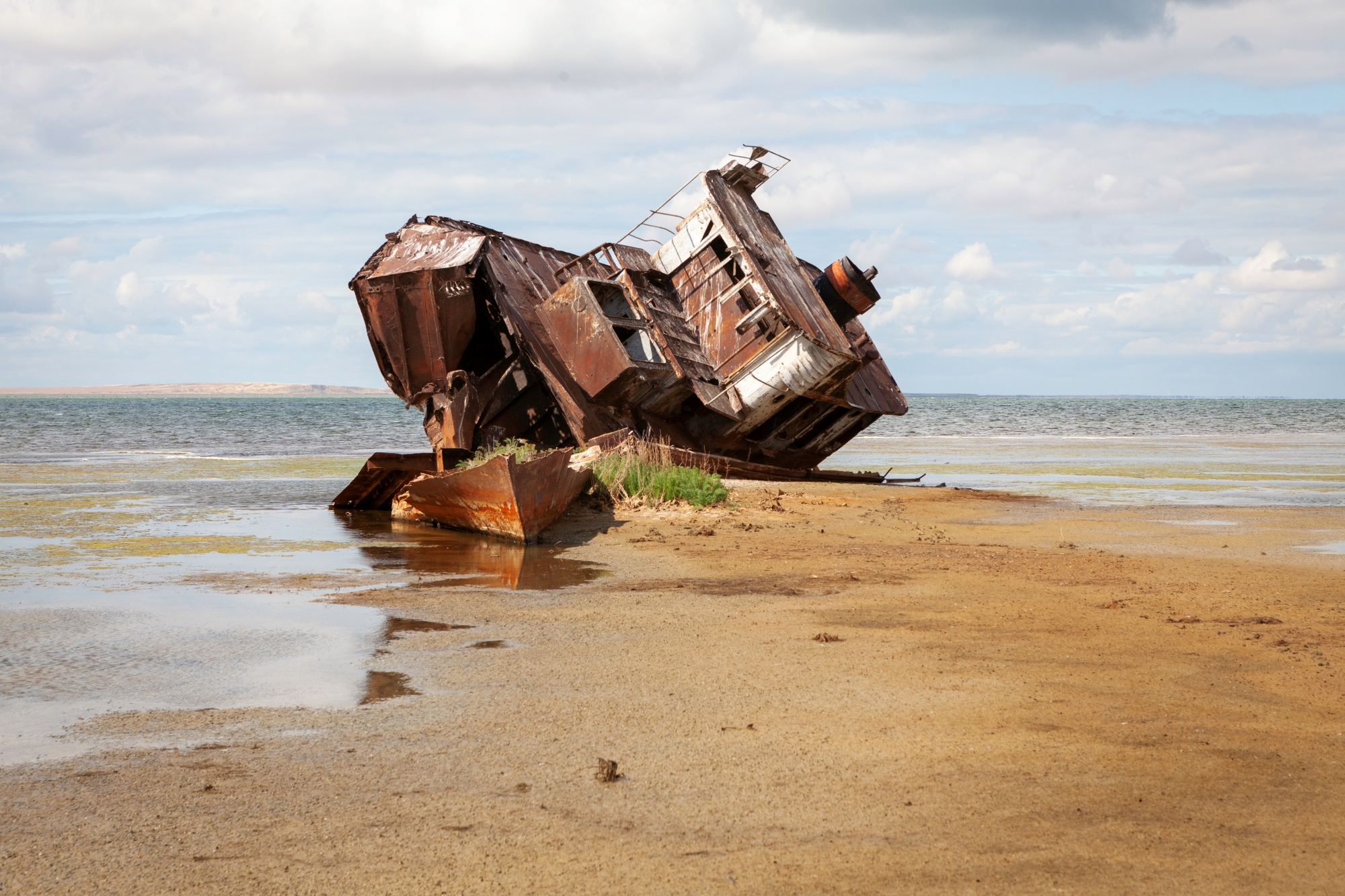
One of the last remaining shipwrecks on the Kazakh shore of the lake. Over the years, villagers cut up the wrecks and sold the metal as scrap.
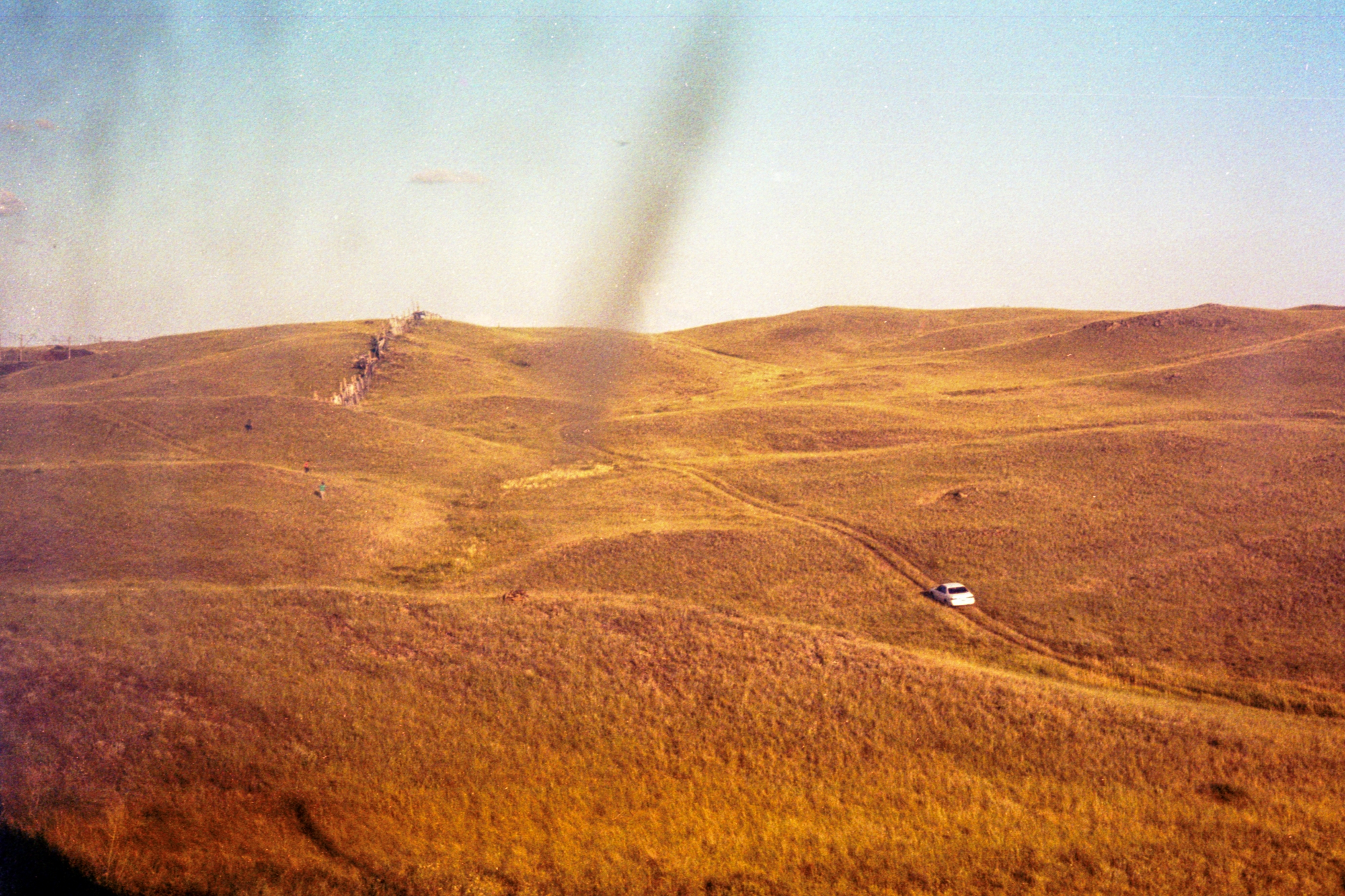
Pavlodar Oblast. View of the Kazakh steppe from the train.
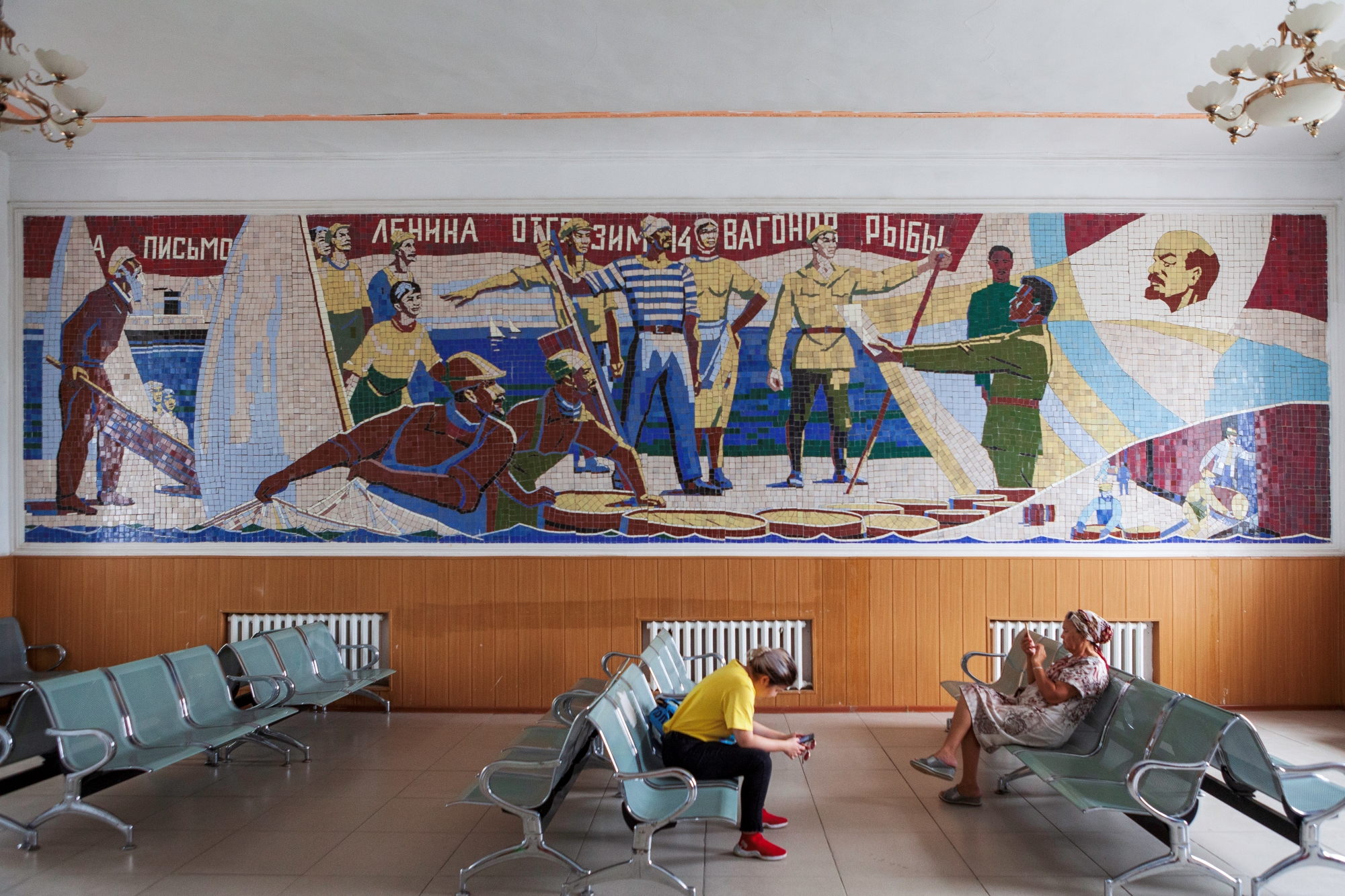
Aral, the waiting room of the railway station, located along the Trans-Aral railway. The mosaic depicts a historical event: the fishermen of Aralsk sent 14 railway wagons loaded with fish to the Soviet Union in response to a request by Lenin during a period of famine in 1921. In memory of this historical event, the mosaic was installed in 1970.
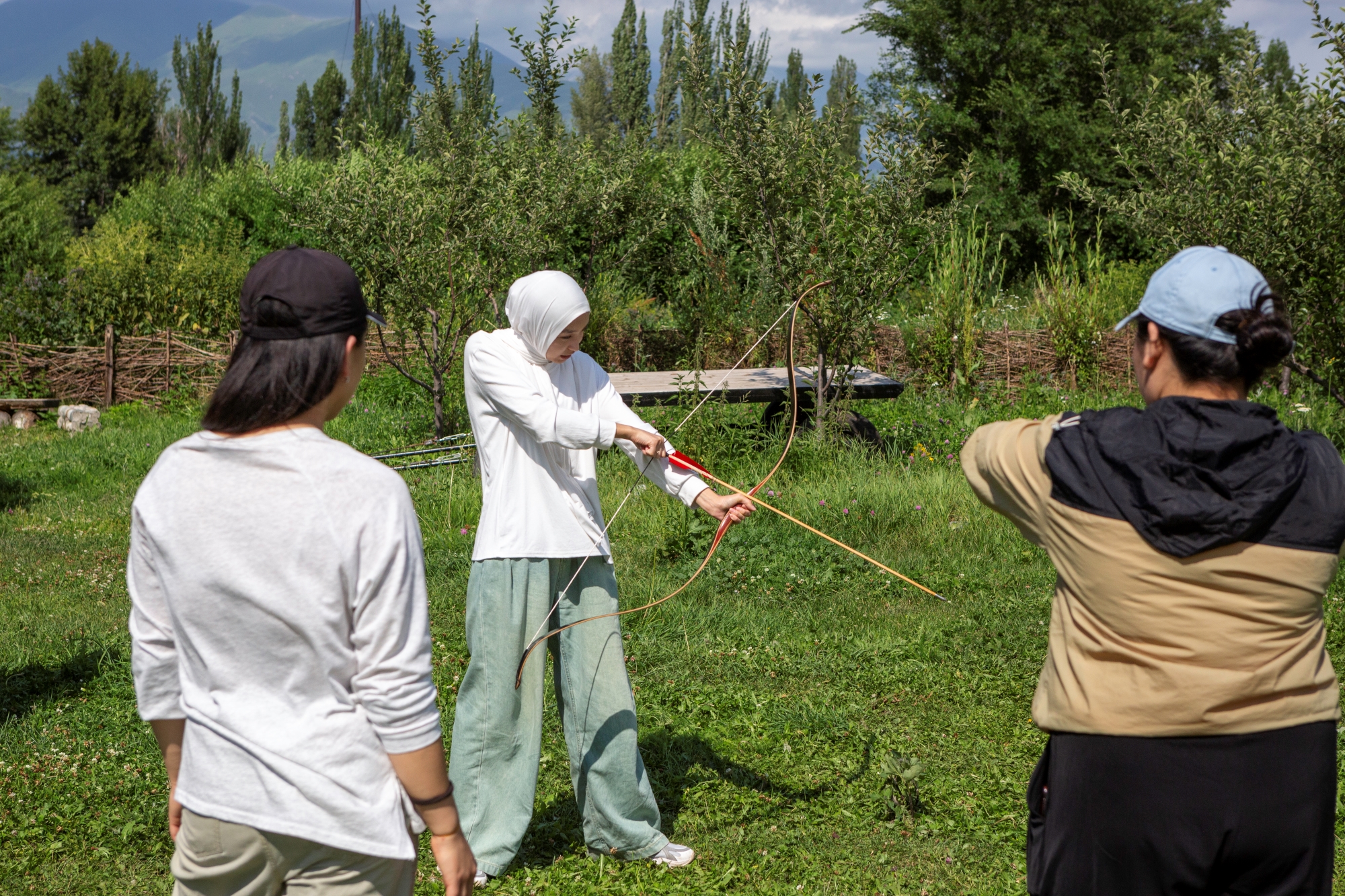
Shabdan, a girl practices archery, one of the national sports of Kyrgyzstan, she uses it along with horses for hunting. The social condition of women in the country is clearly improving, despite serious social problems such as Alakachuu, the rapid divorce of wives.
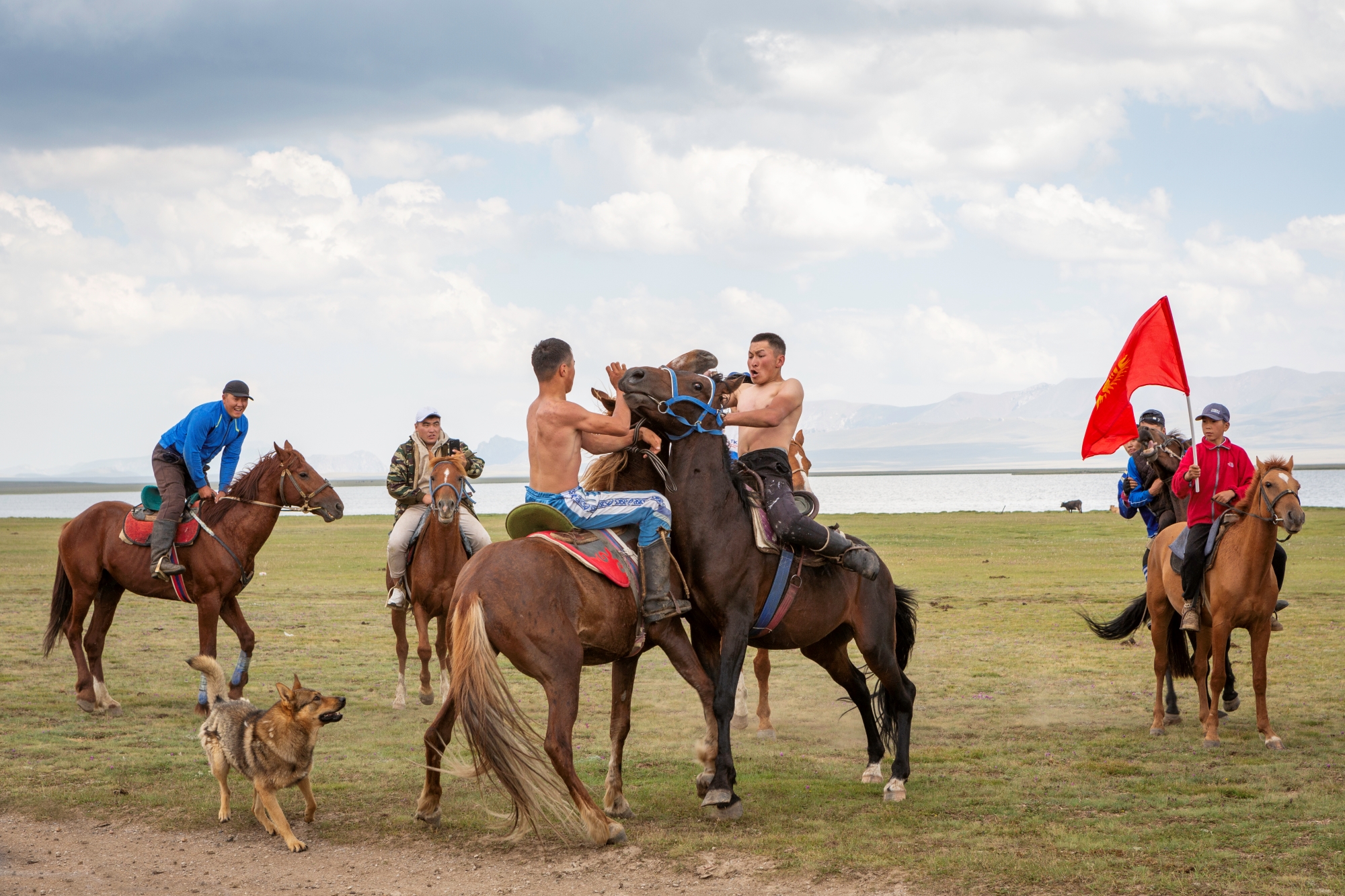
Songköl Lake, during the annual Kochkor festival, two men compete in the Er-enish, the horse-fighting competition. The winner is the one who knocks down the opponent.
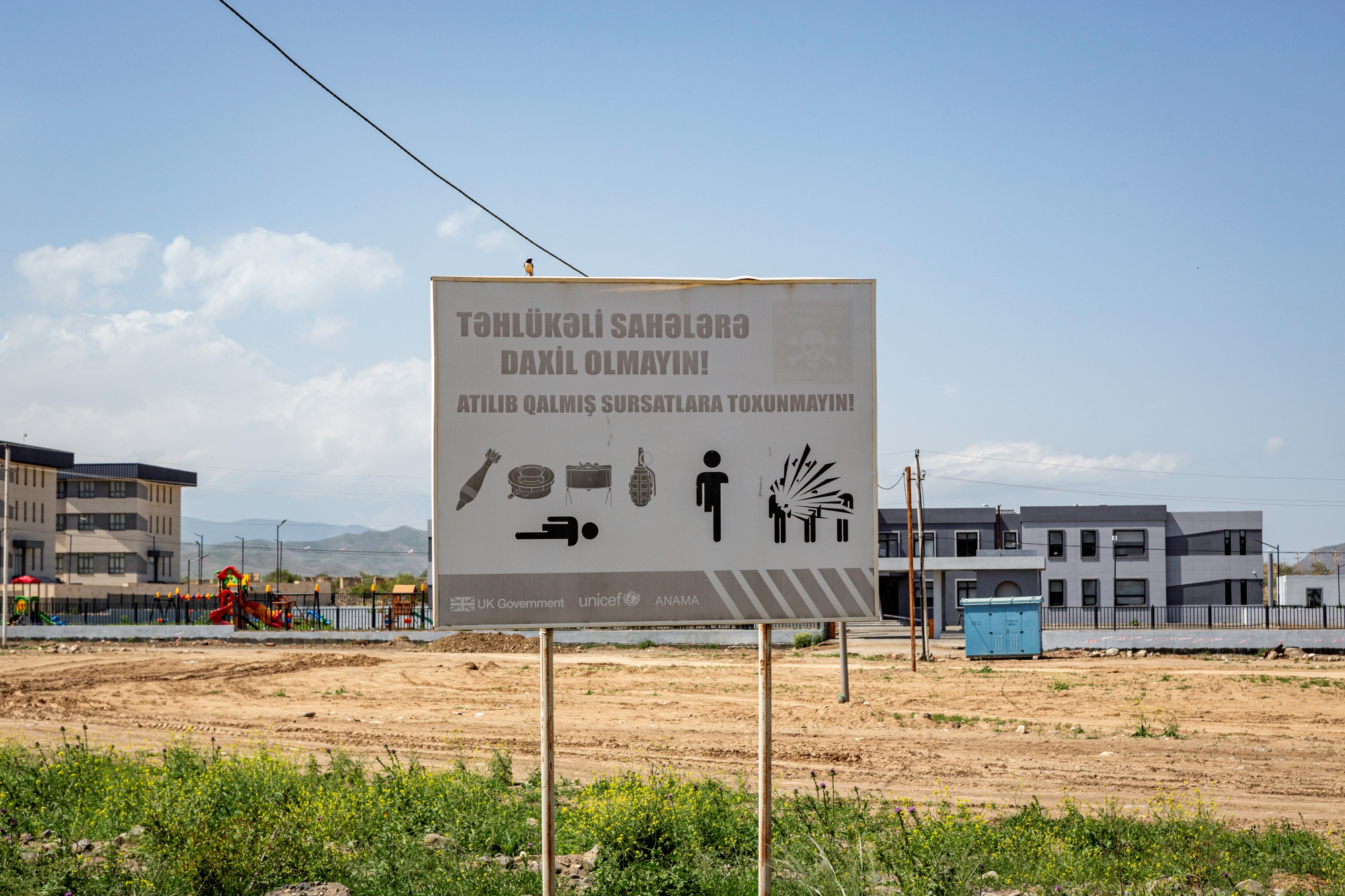
Agdam. A warning sign about the danger of landmines stands in front of the new kindergarten and elementary schools. The entire territory of Qarabag is contaminated with anti-personnel mines; it is estimated that it will take 15 years to fully clear the region.
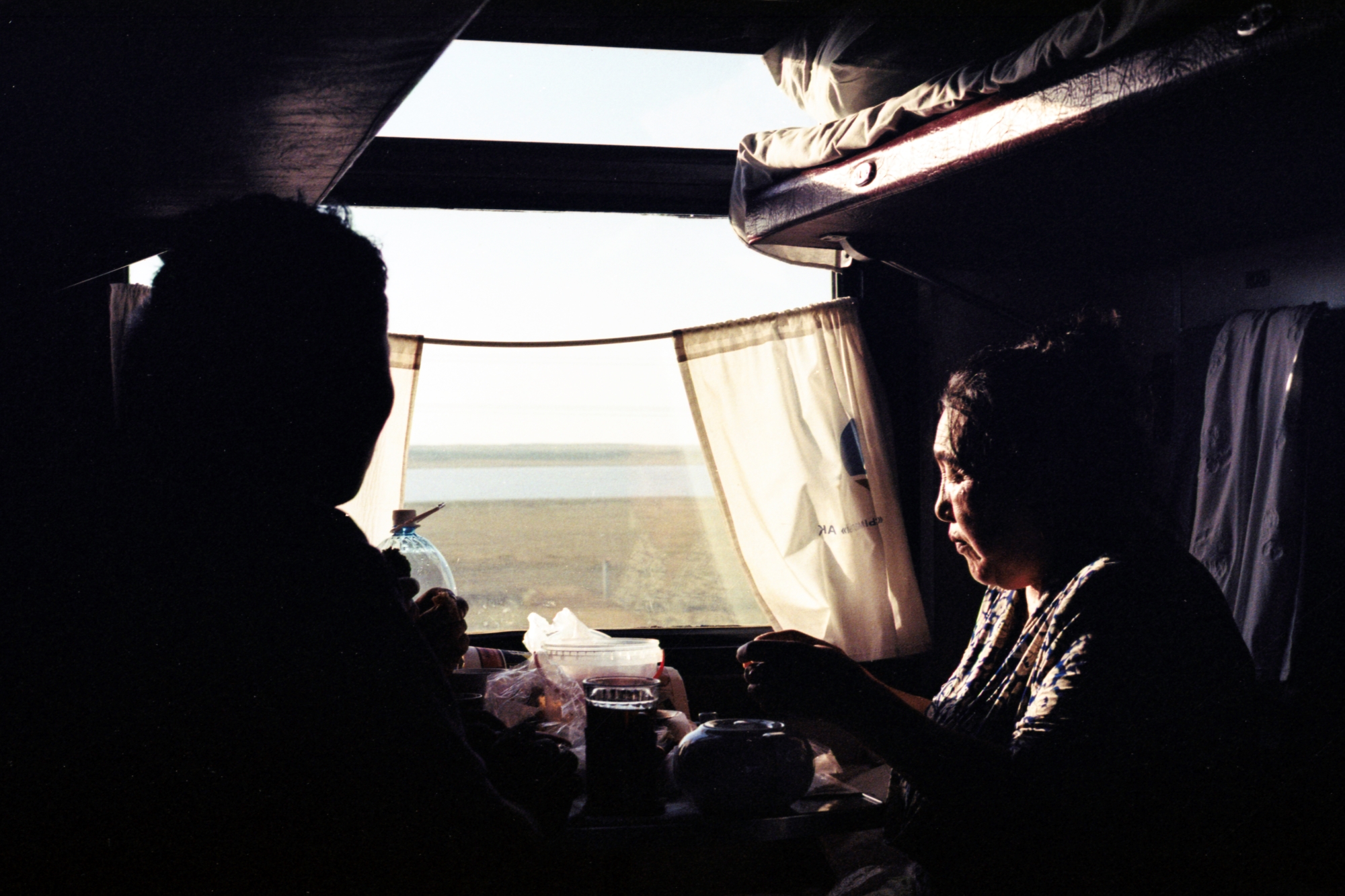
Pavlodar Oblast. A family is having a snack. Given the enormous size of Kazakhstan, the most economical way to travel is by train, with journeys that can also last several days.
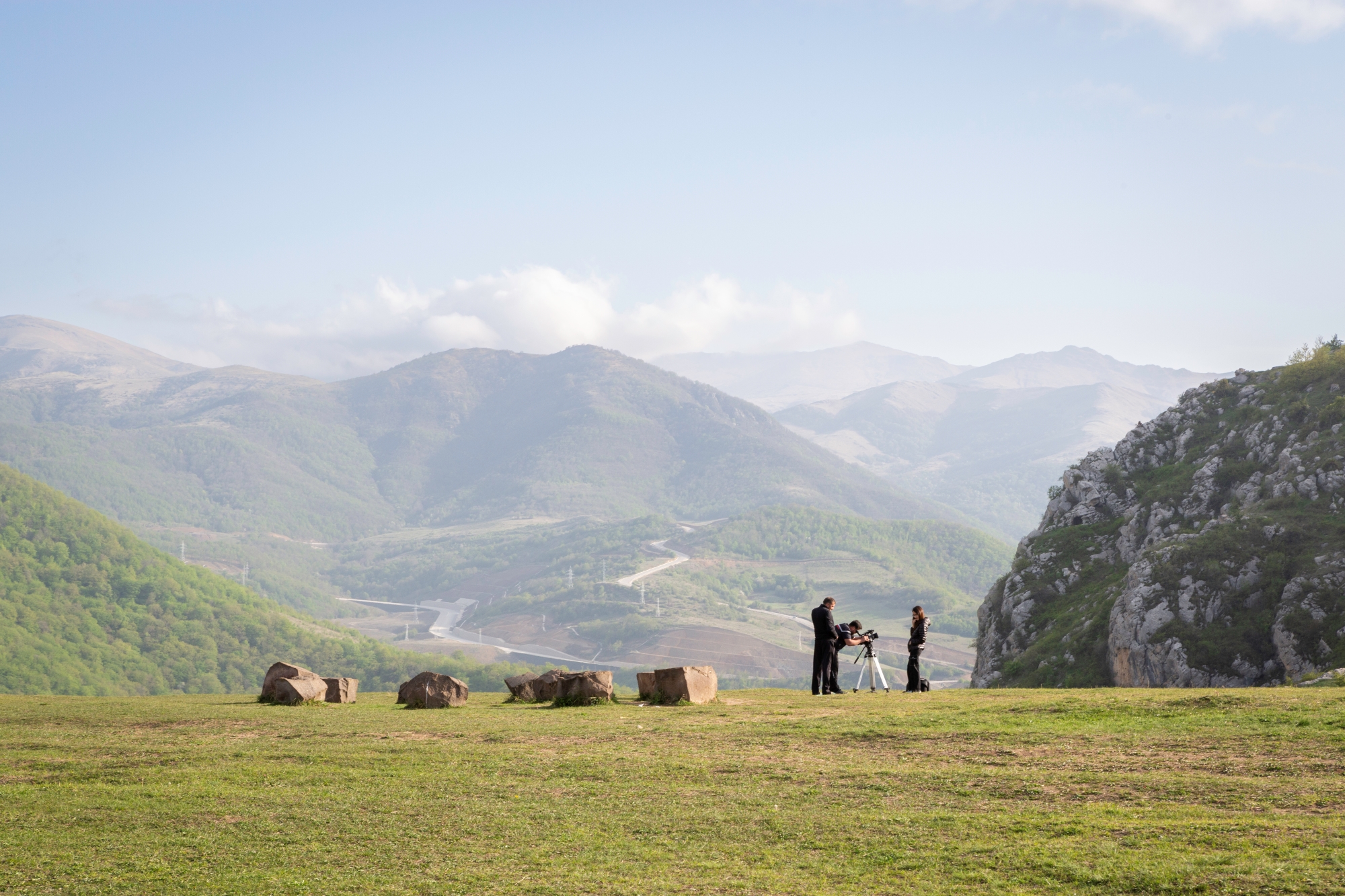
Shusha. Jidir Duzu Park is a vast meadow overlooking the hill above Shusha. Considered a sacred place by Azerbaijanis, it has hosted music festivals over the years. Members of the regional television are preparing a report, with the old and the new road to Fuzuli in the background.
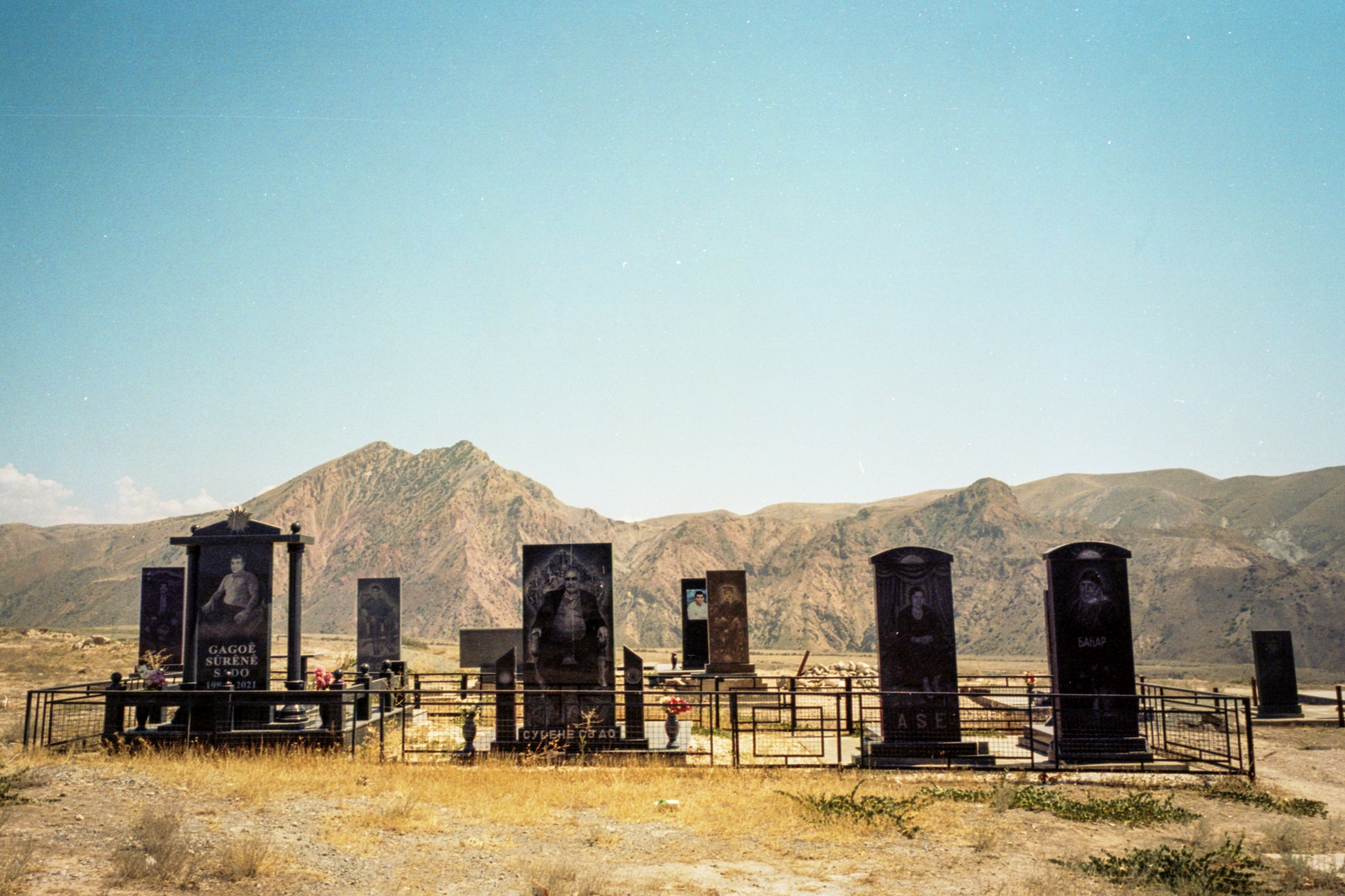
Dashtadem. The new cemetery.
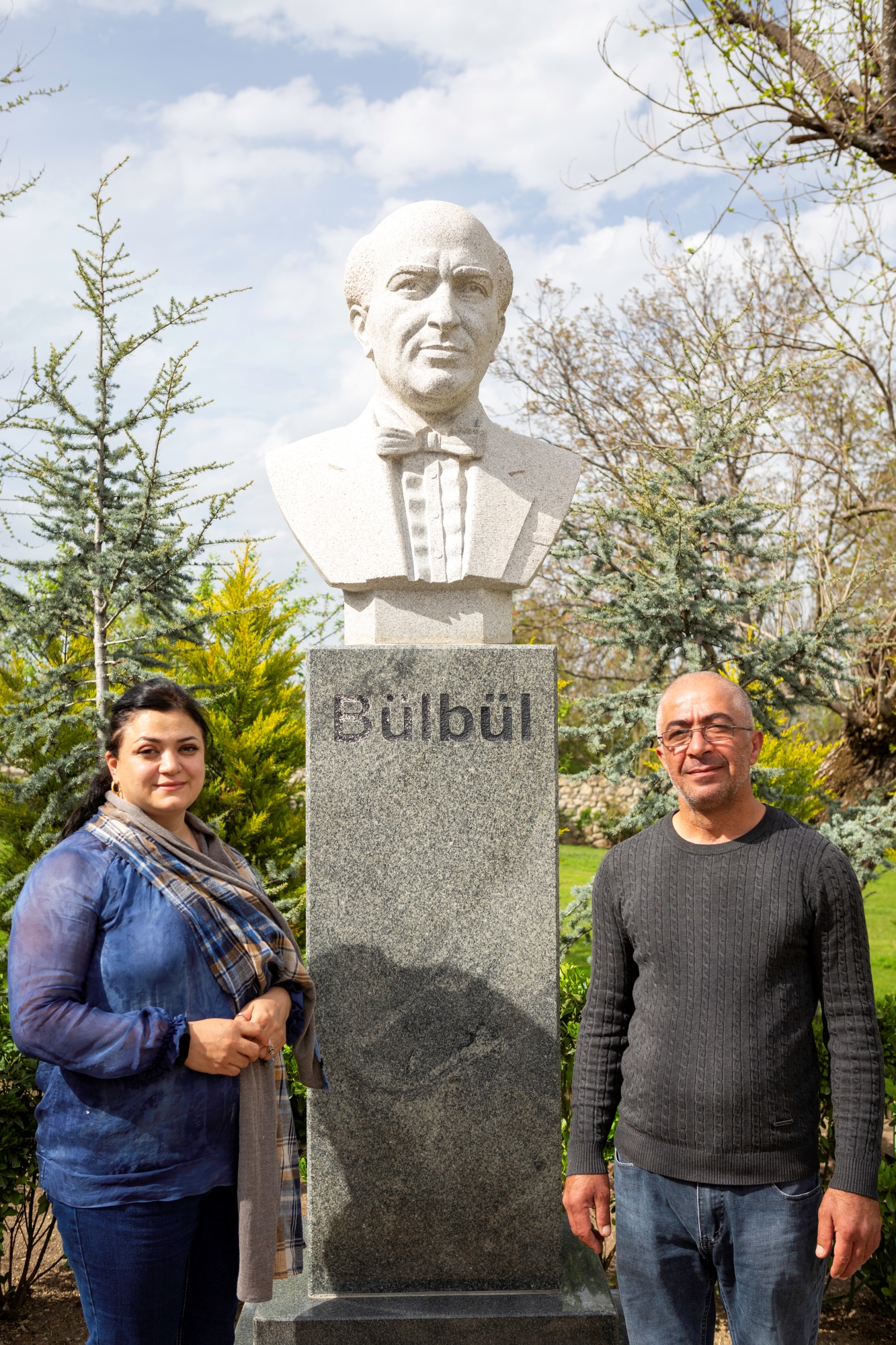
Shusha. Ulvija and Murat are curators of the Bulbul Museum, dedicated to the tenor and founder of the Azerbaijani National Musical Theatre, built inside his childhood home.
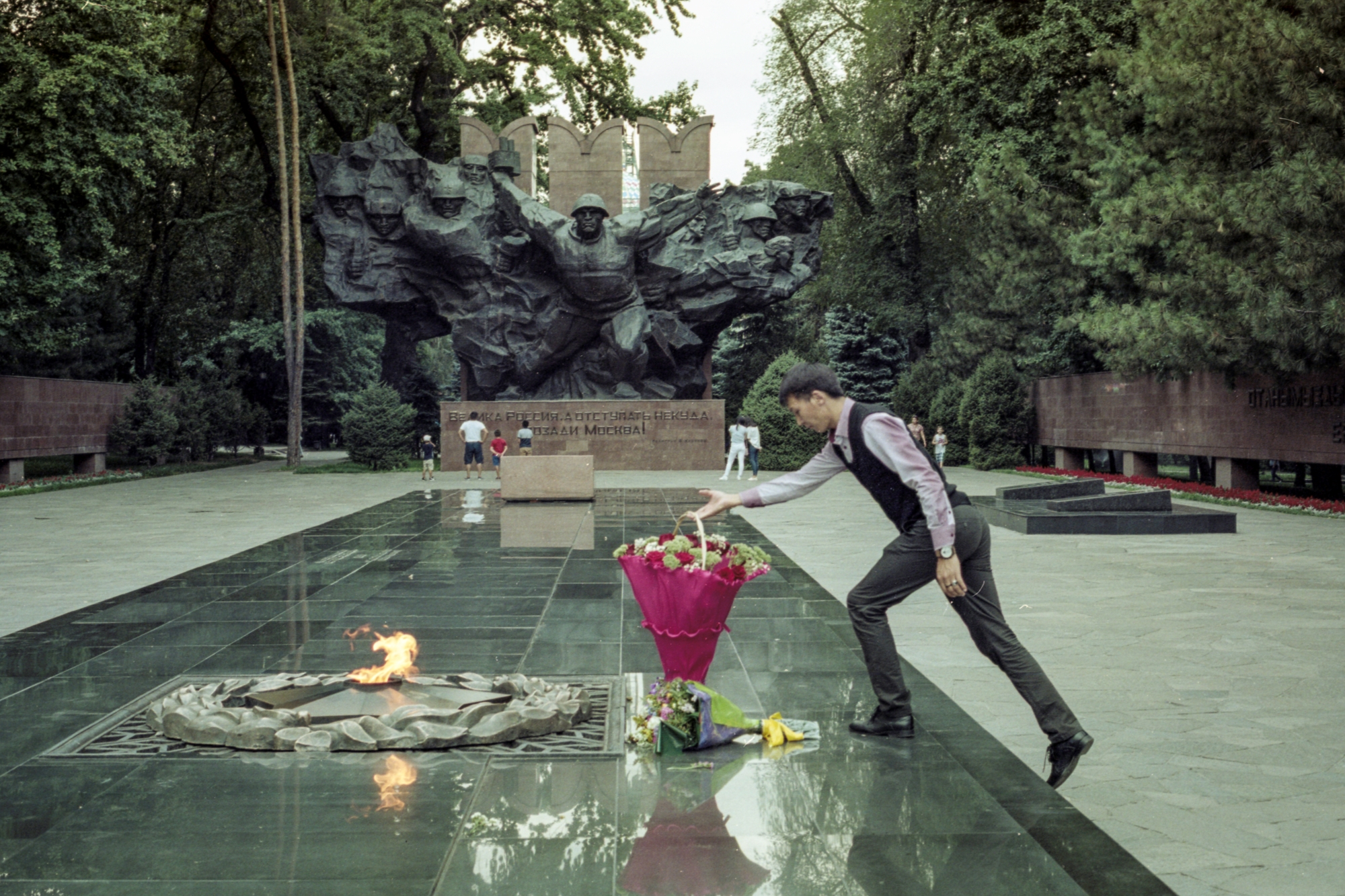
Almaty. Memorial of the Great Patriotic War.
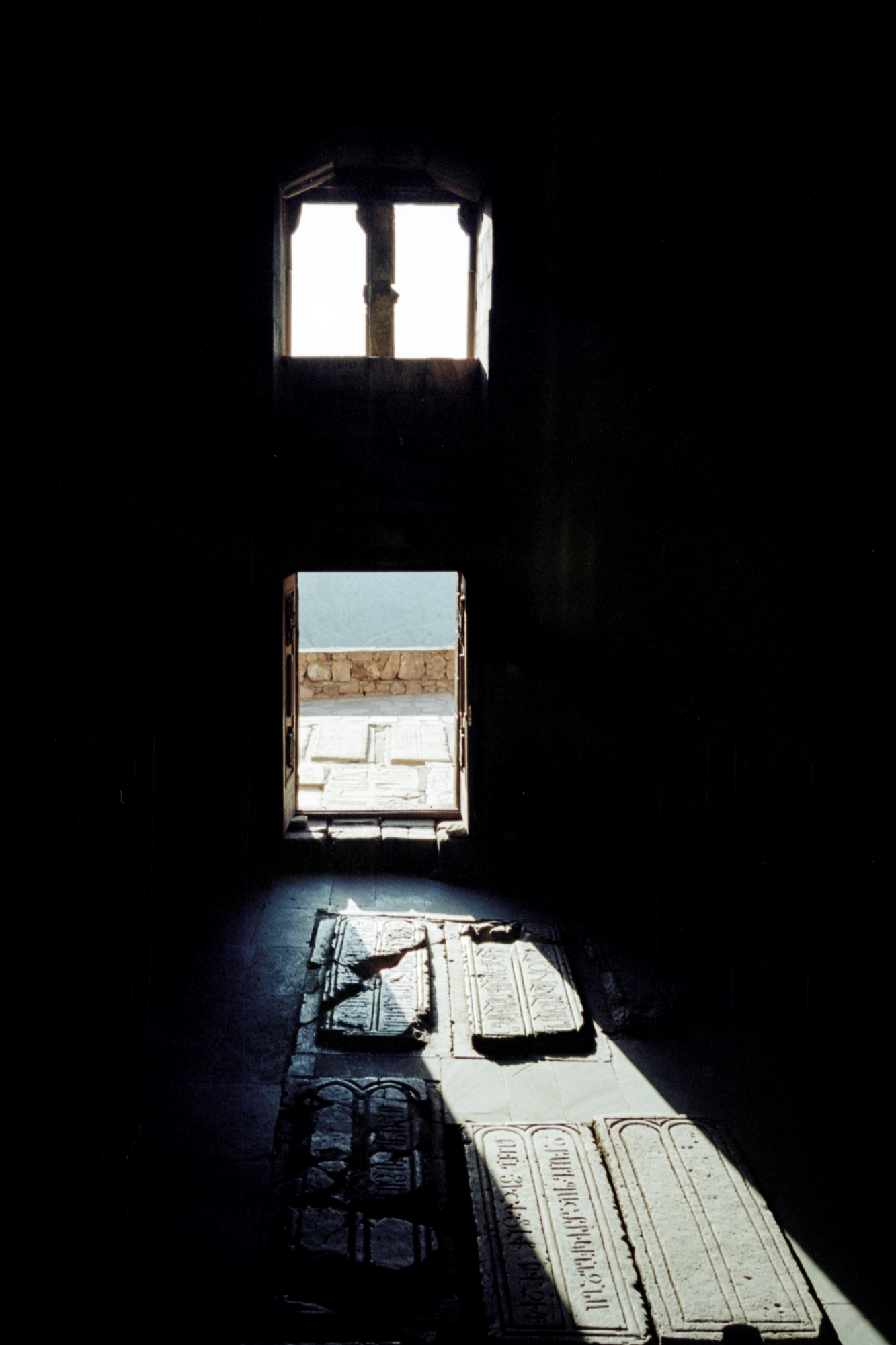
Noravank. Tombstones engraved with inscriptions in the Armenian alphabet, created in 405 AD by the cleric Mesrop Mashtots to translate the Bible. The monastery was built in the 13th century, surrounded by steep red tuff cliffs inside the gorge of the Amaghu River.
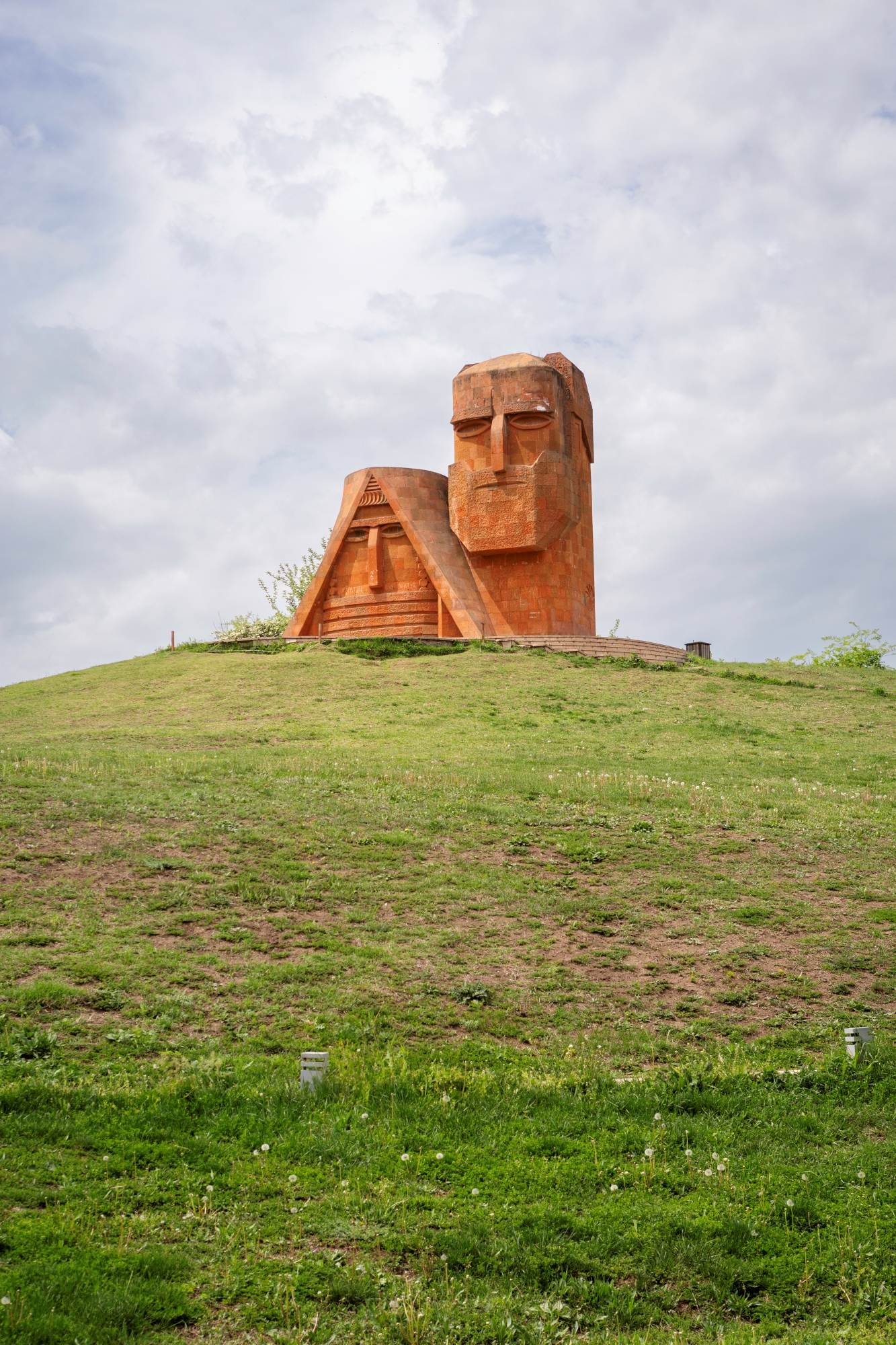
Khankendi. “We Are Our Mountains.” Monument built in 1967 from traditional Armenian tuff stone, considered one of the symbols of Armenian heritage in Nagorno-Karabakh.
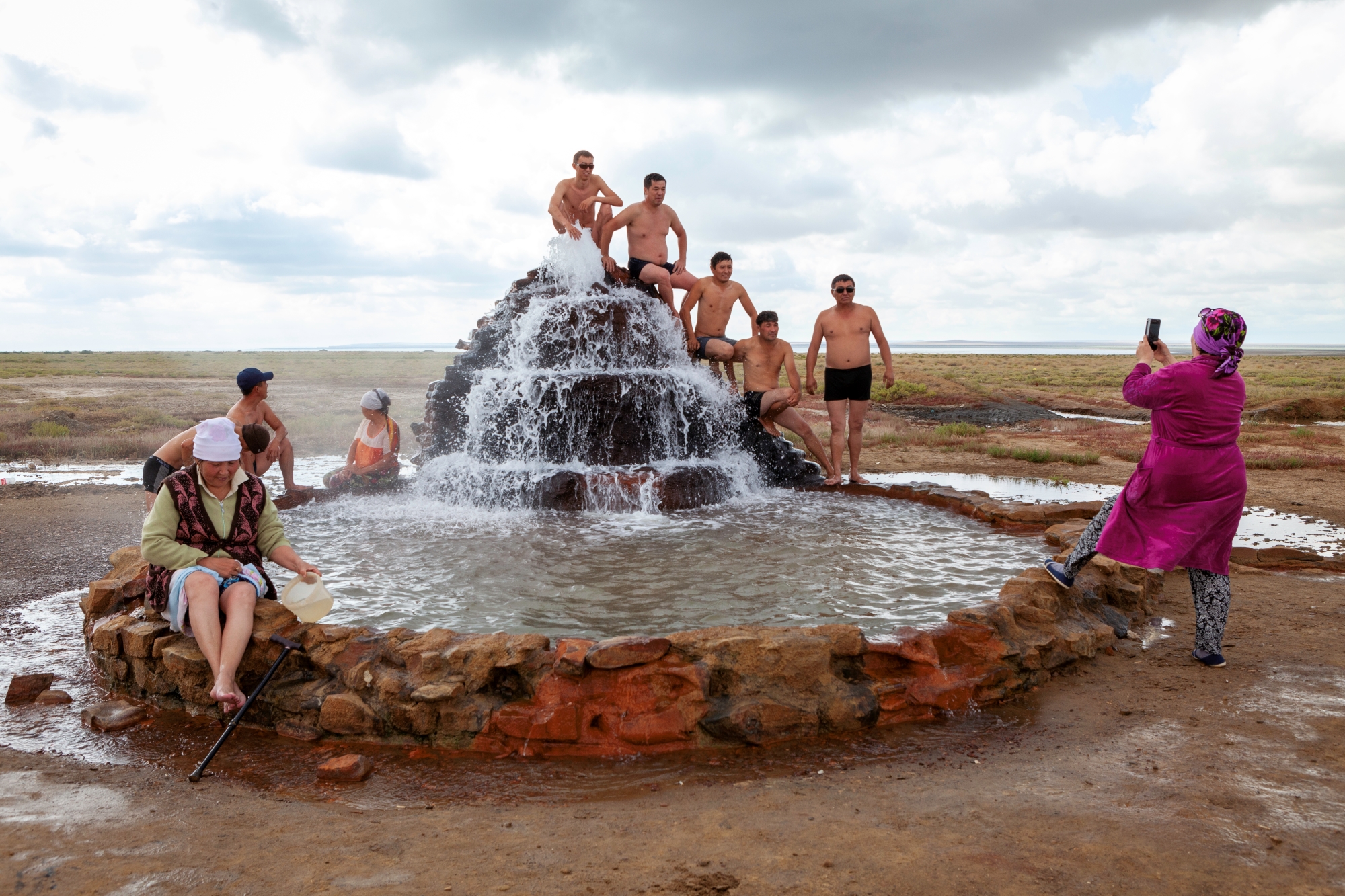
Aqespe. Due to the drop in the lake’s water level, in 1986 the company Georazvedka Shymkent, during geological drilling, discovered a hot water spring at a depth of 1,200 meters (about 60°C). Today it is used by the inhabitants of nearby villages for its medicinal properties.
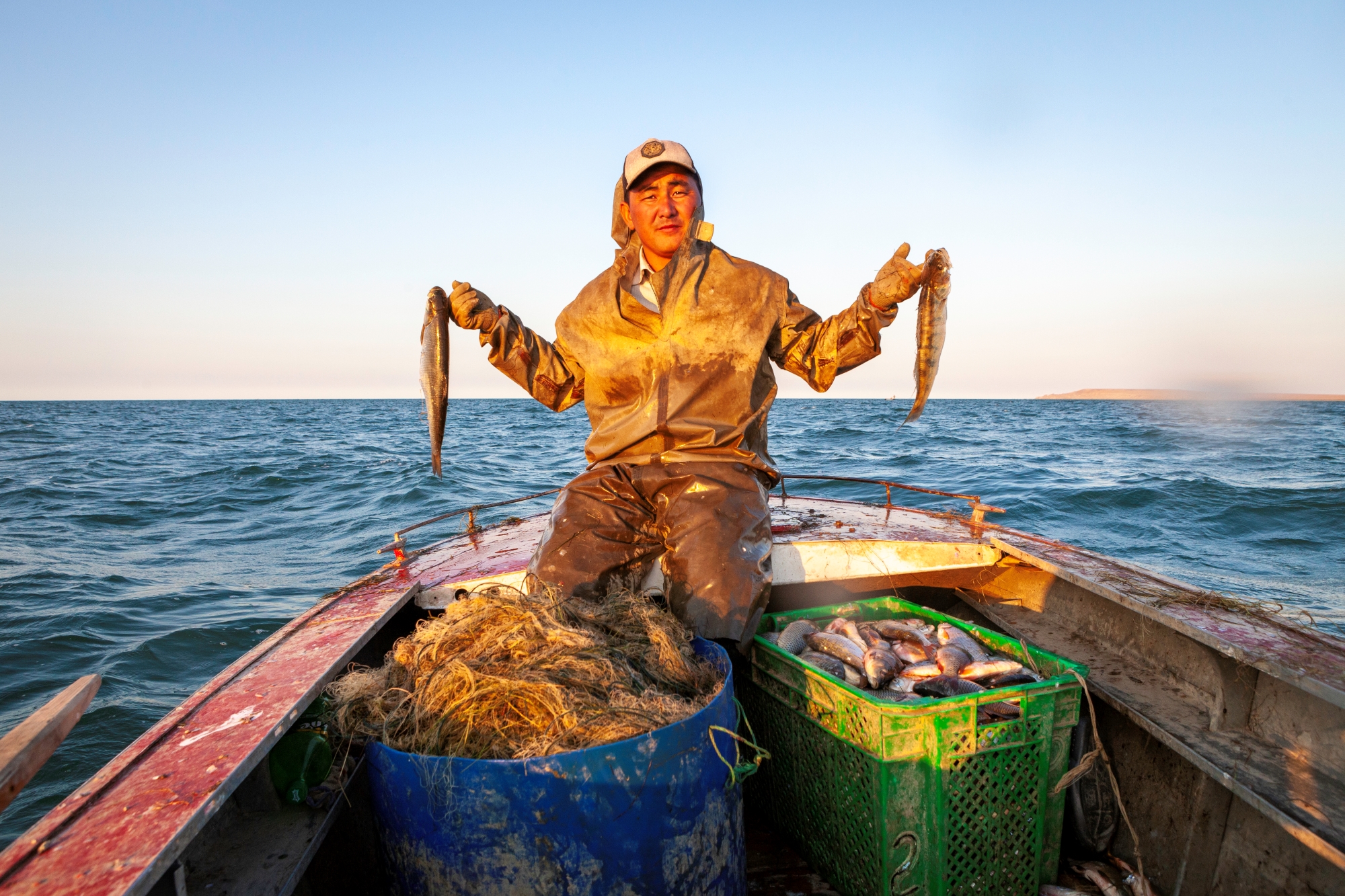
Tastubek. Nurzhan proudly shows the morning’s catch. While the Uzbek side of the lake is now completely dry, on the Kazakh side, thanks to the construction of the Kokaral dam, the waters of the Syr Darya have been prevented from dispersing into the old drainage basin. Today the water level is rising, encouraging the recovery of fishing and the fishing industry.
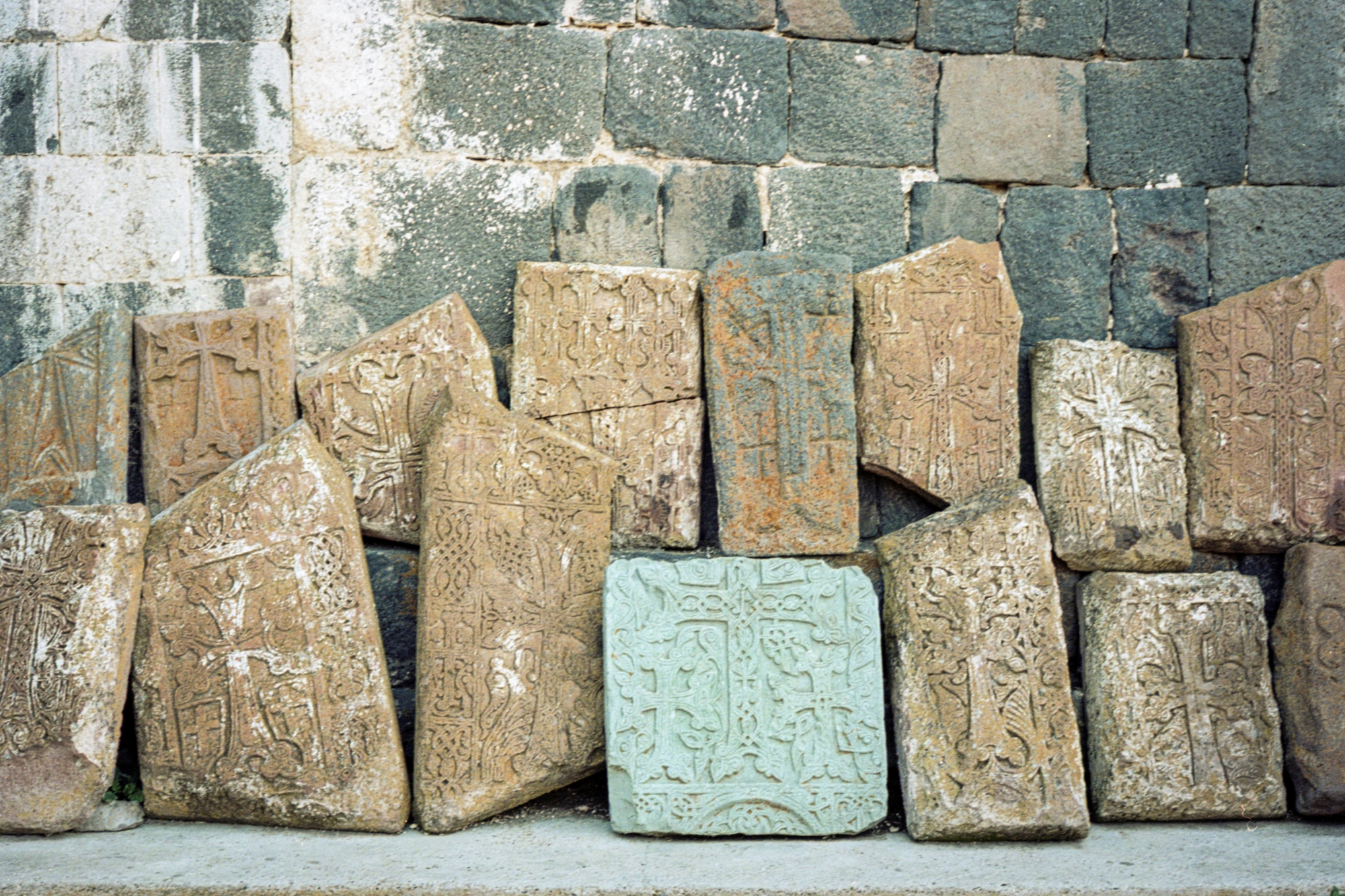
Sevanavank. Funerary khachkars (cross-stones) leaning outside the monastery. Typical Armenian sculptures, they are fixed crosses, sometimes with a small rosette or a solar disc on the lower part, surrounded by leaf patterns, grape clusters, or abstract motifs. Occasionally, they are mounted on a cornice with figures of saints.
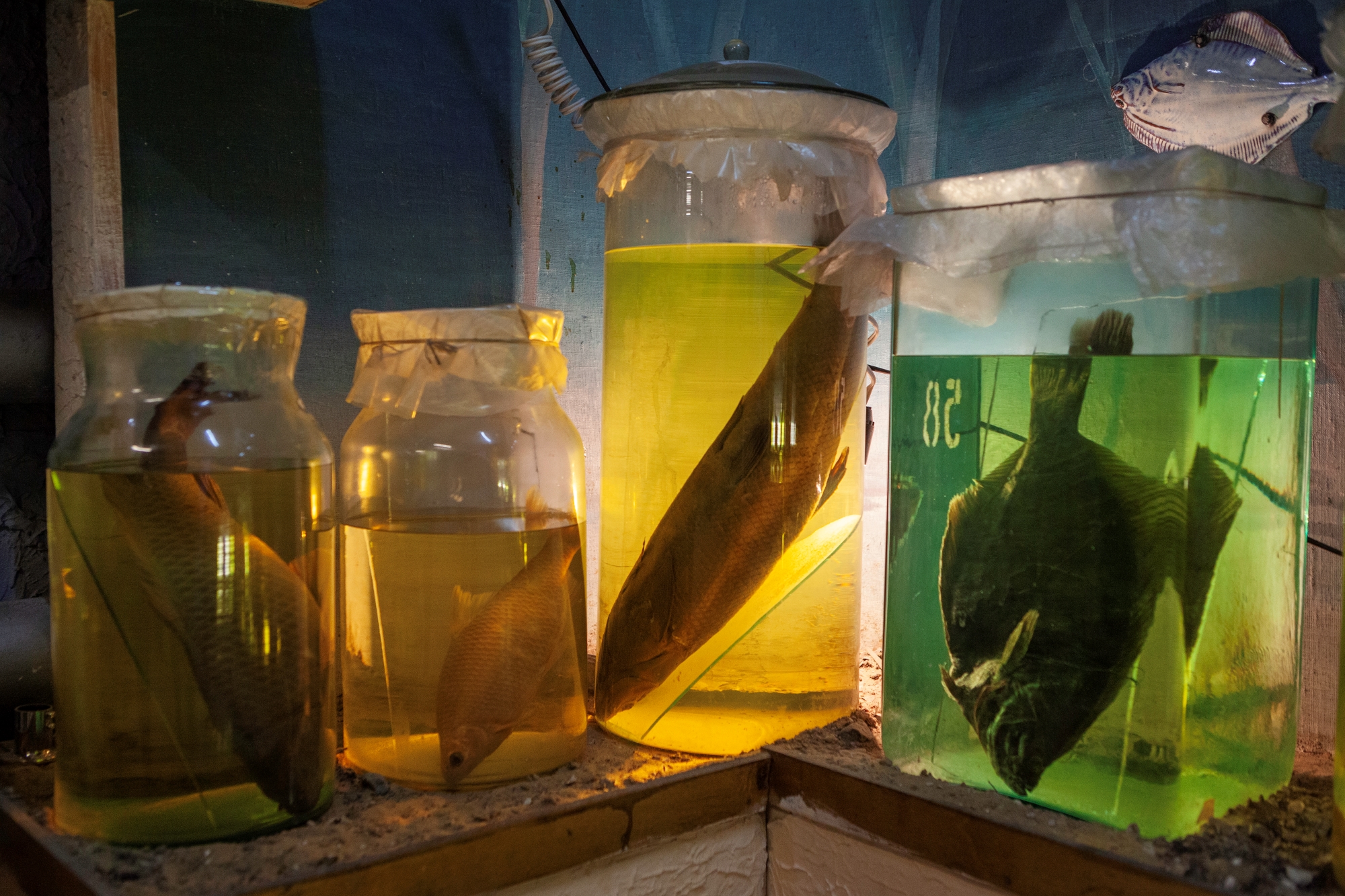
Aral, city museum. Specimens of fish that have now disappeared from the lake.
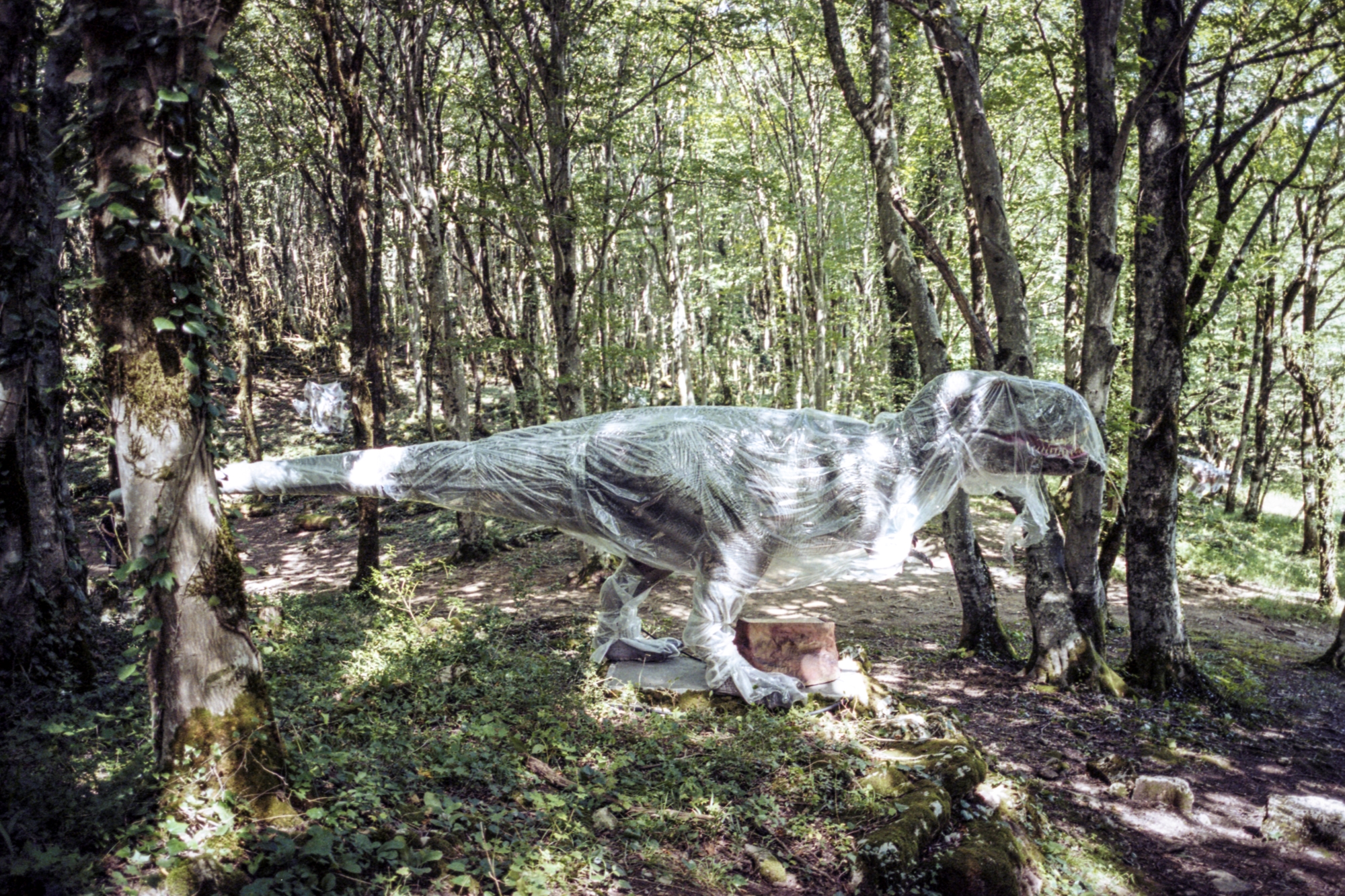
Sataplia. A dinosaur is protected during restoration works of the natural park. The area is famous for its caves and dinosaur footprints.
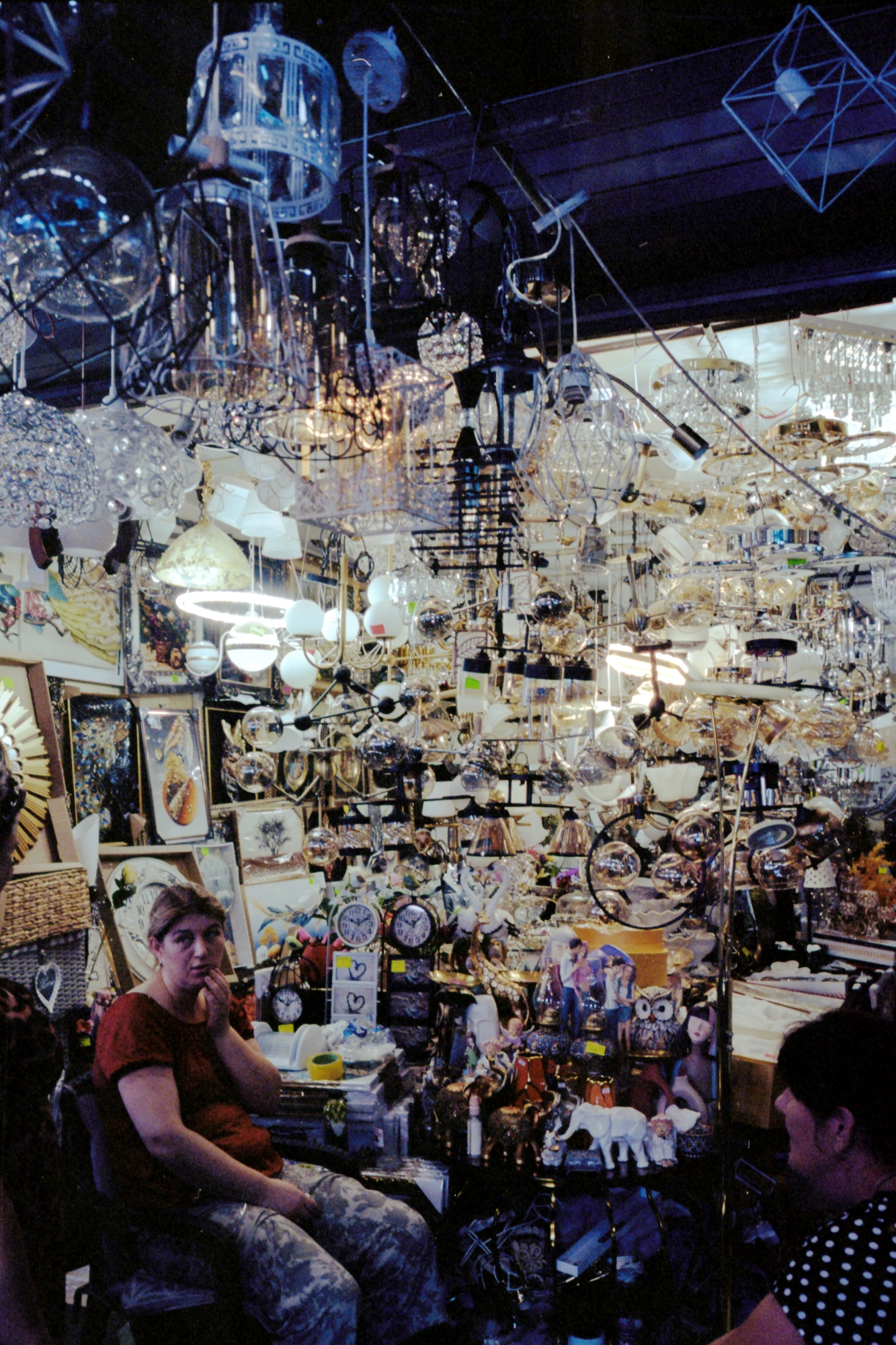
Zugdidi. A lamp store in the covered market.
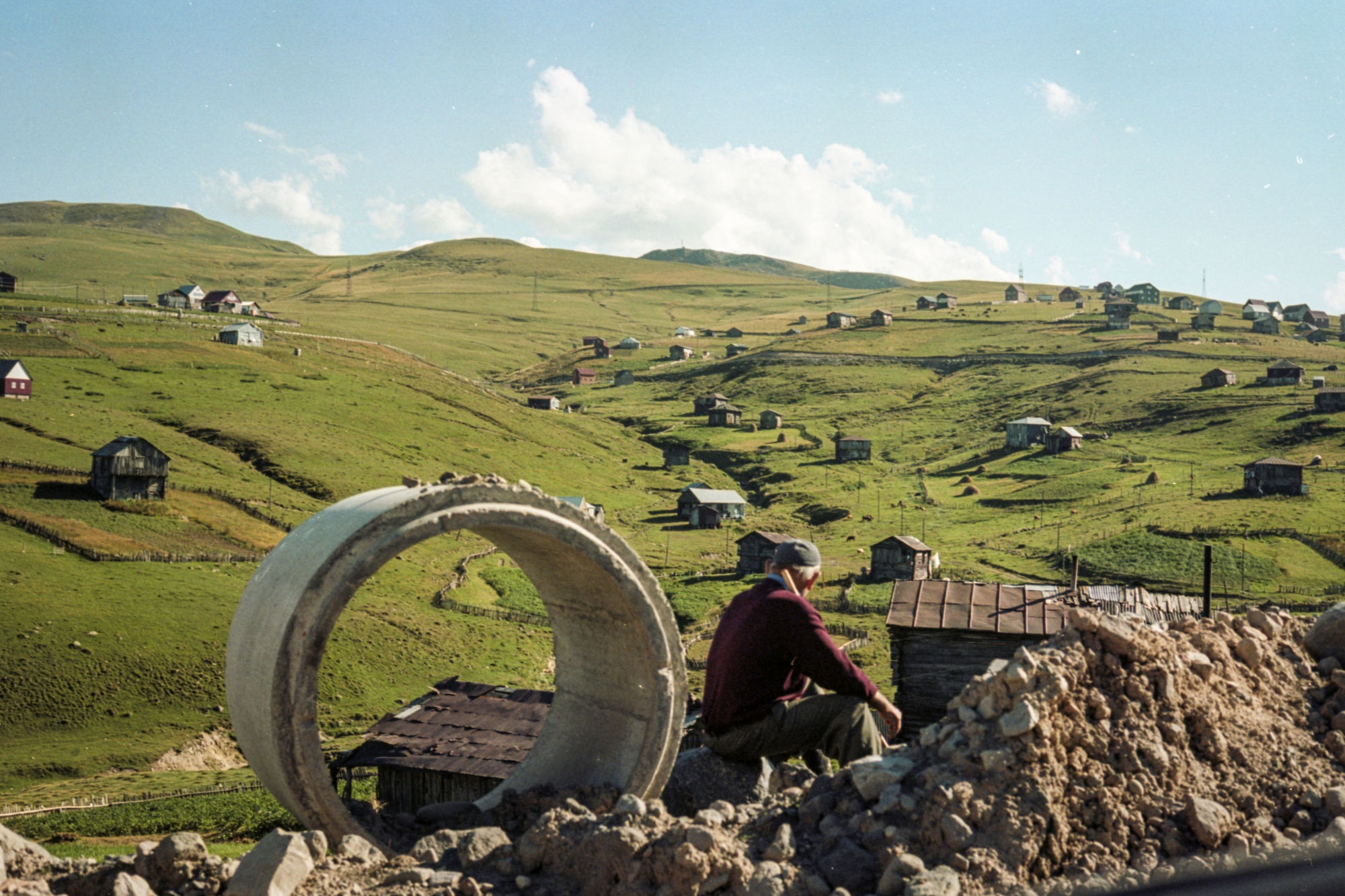
Goderdzi Pass. An elderly man observes his semi-abandoned village, next to the road under construction that will connect Batumi to Akhaltsikhe, passing through the new comprehensive ski resort.
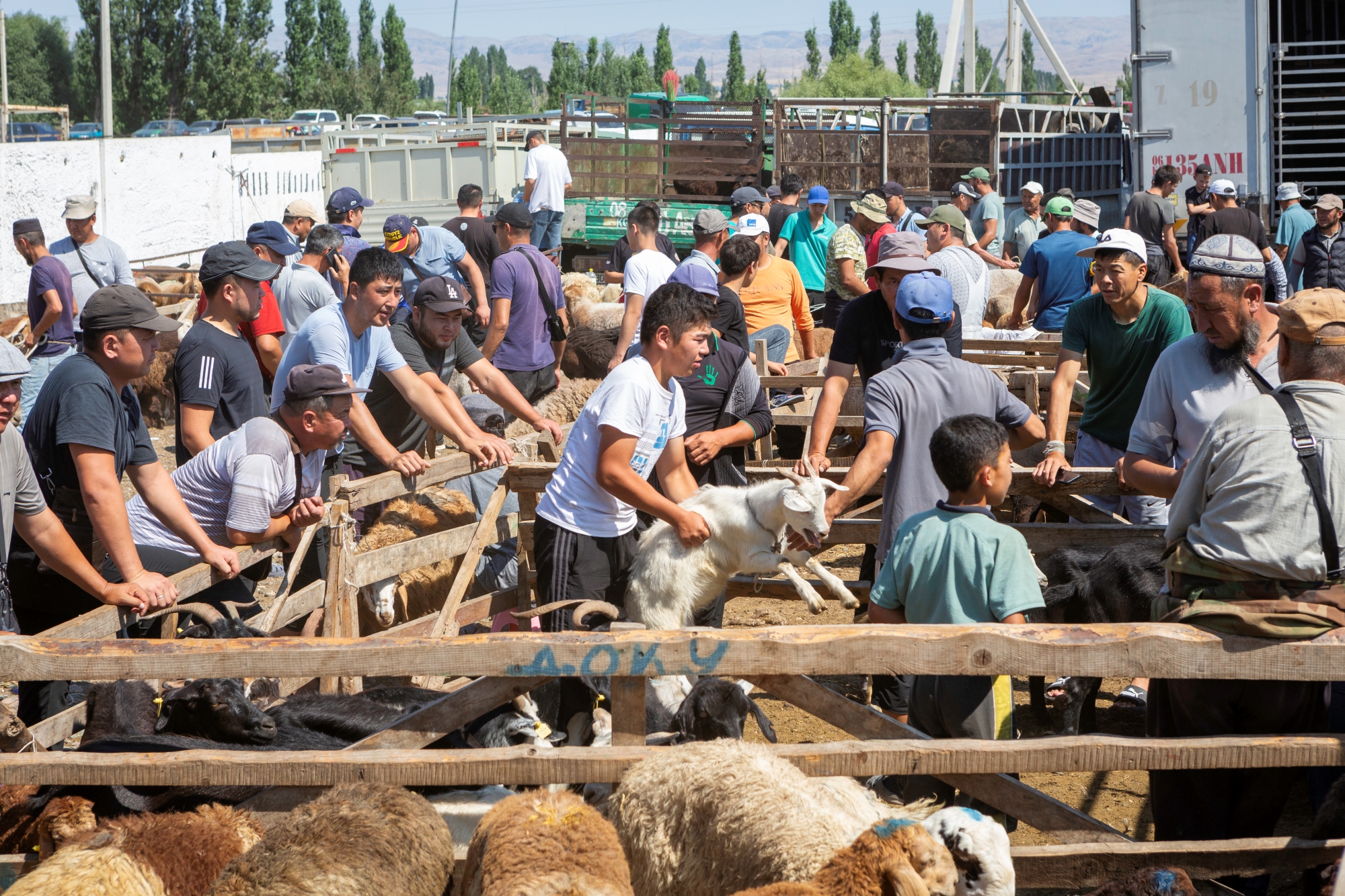
Tokmok, the traditional animal market, where every week thousands of livestock of various kinds are sold.
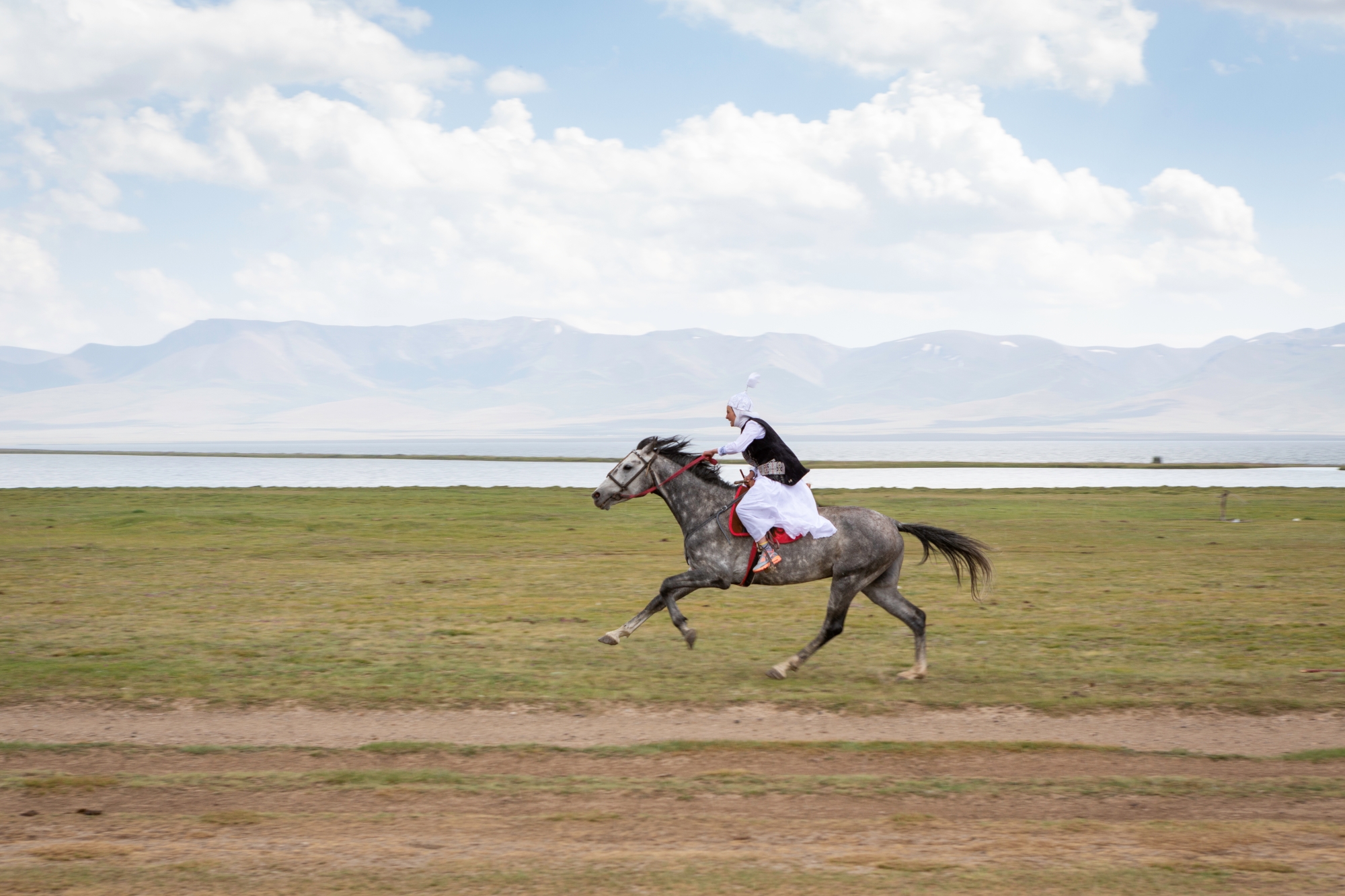
Songköl Lake, during the annual Kochkor festival, a traditionally dressed woman kisses in the Kyzkuu game, where a man and a woman chase each other. The first to reach the goal can kiss the other.
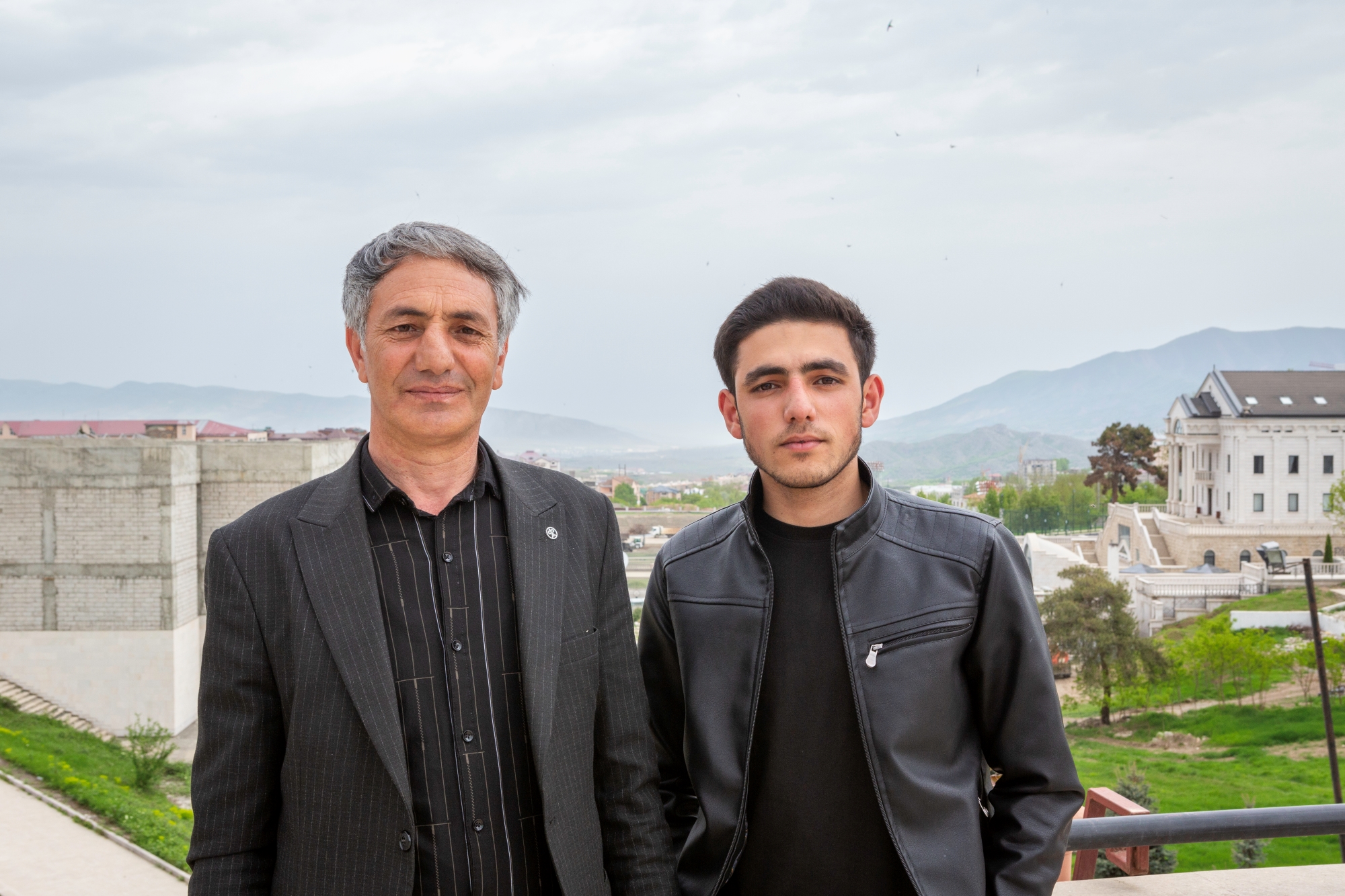
Khankendi. In front of the former parliament building, Osman Khalilov with his son Nurlan Osmanoglu. He once lived near Lachin, in the village of Sham, where 60 families resided. The village was destroyed during the war. He has now lived as a refugee in Bardja for 34 years and hopes one day to return to live in his village.
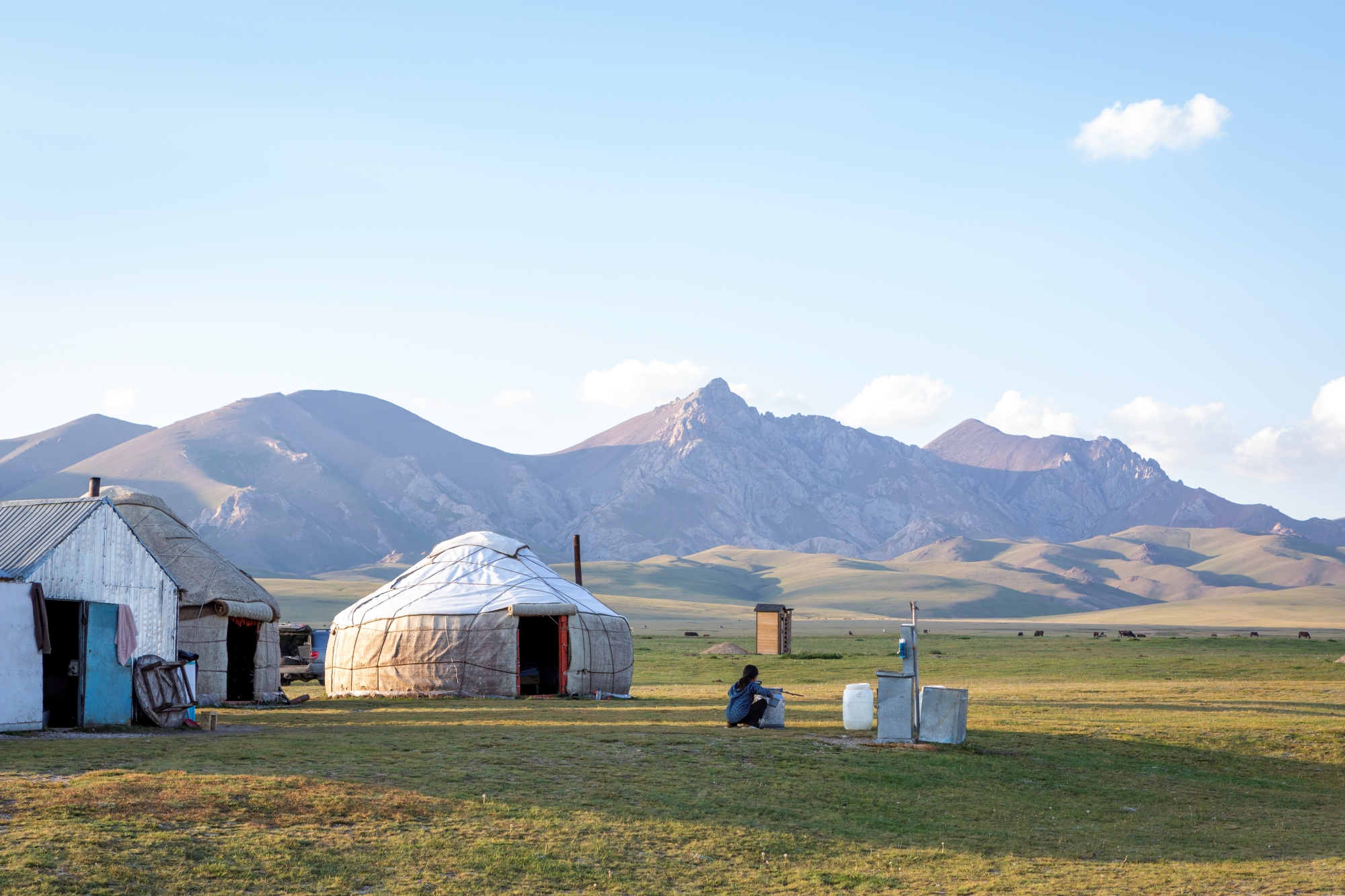
Songköl Lake, view from the surrounding mountains with a yurt camp.
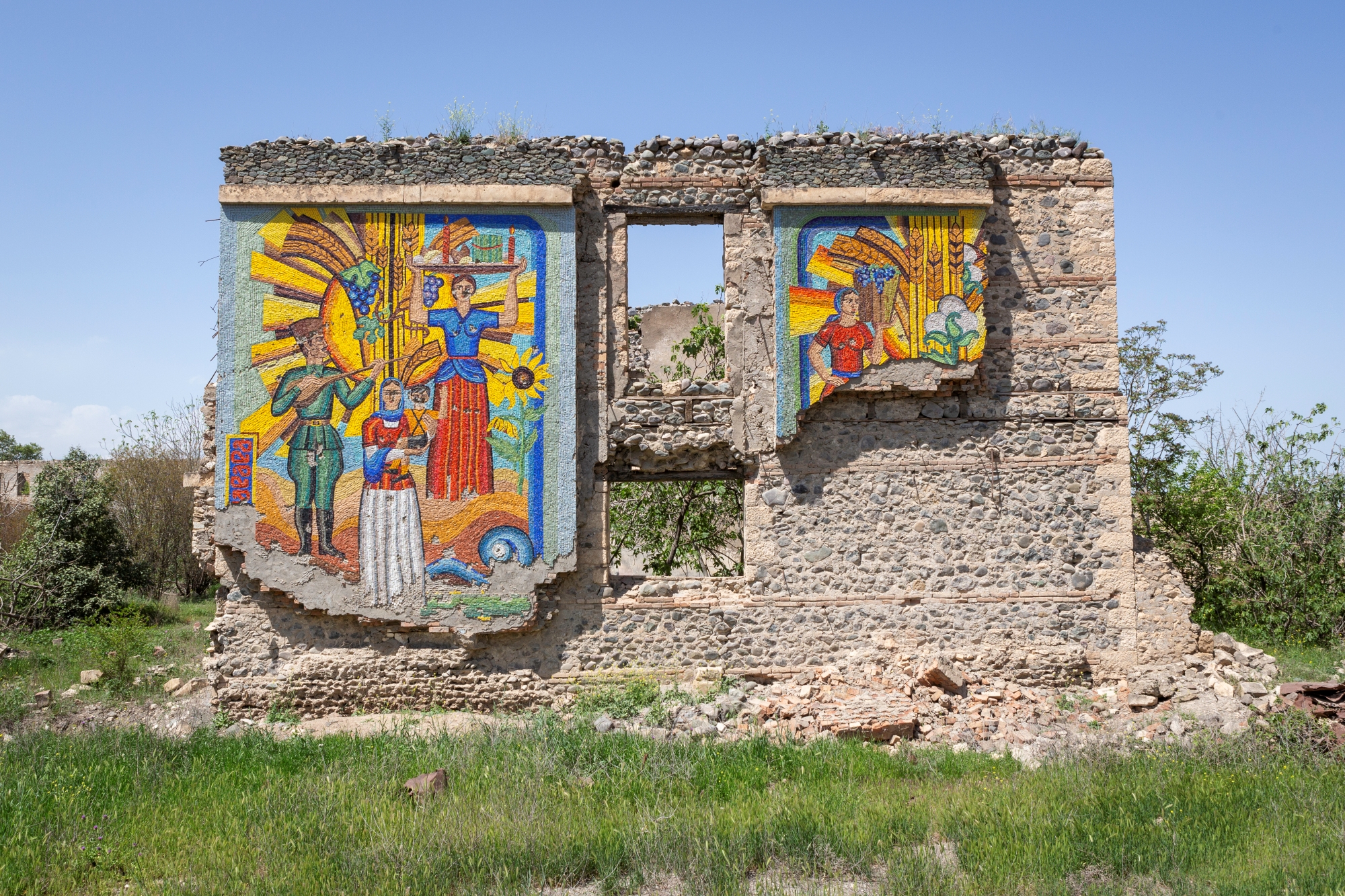
Agdam. The ruins of the mosaic from the Bread Museum. Built in 1982, it was destroyed in 1992 by Armenian artillery during the First Nagorno-Karabakh War.
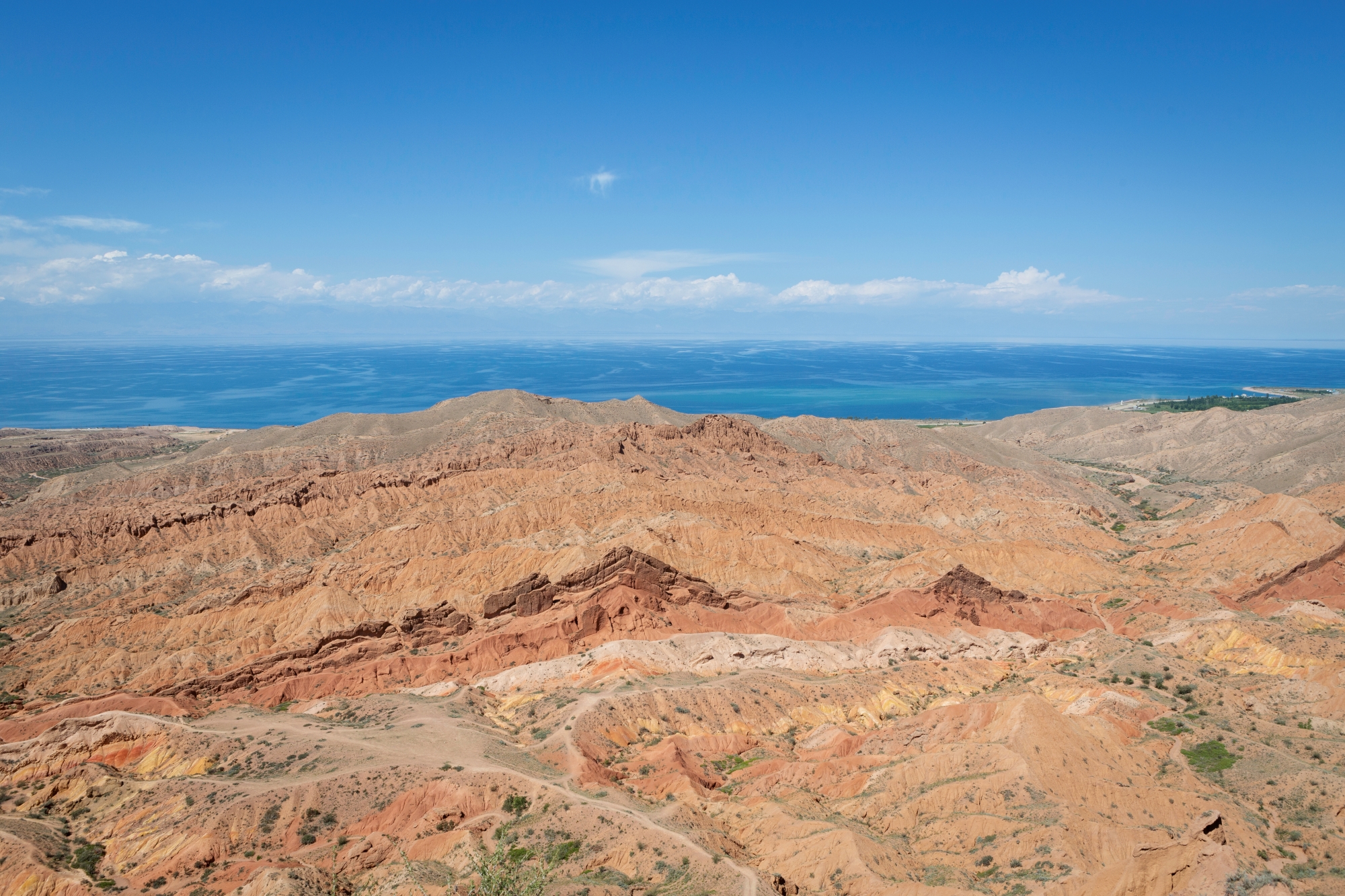
Skazka Canyon, view of Issyk-Kul Lake.
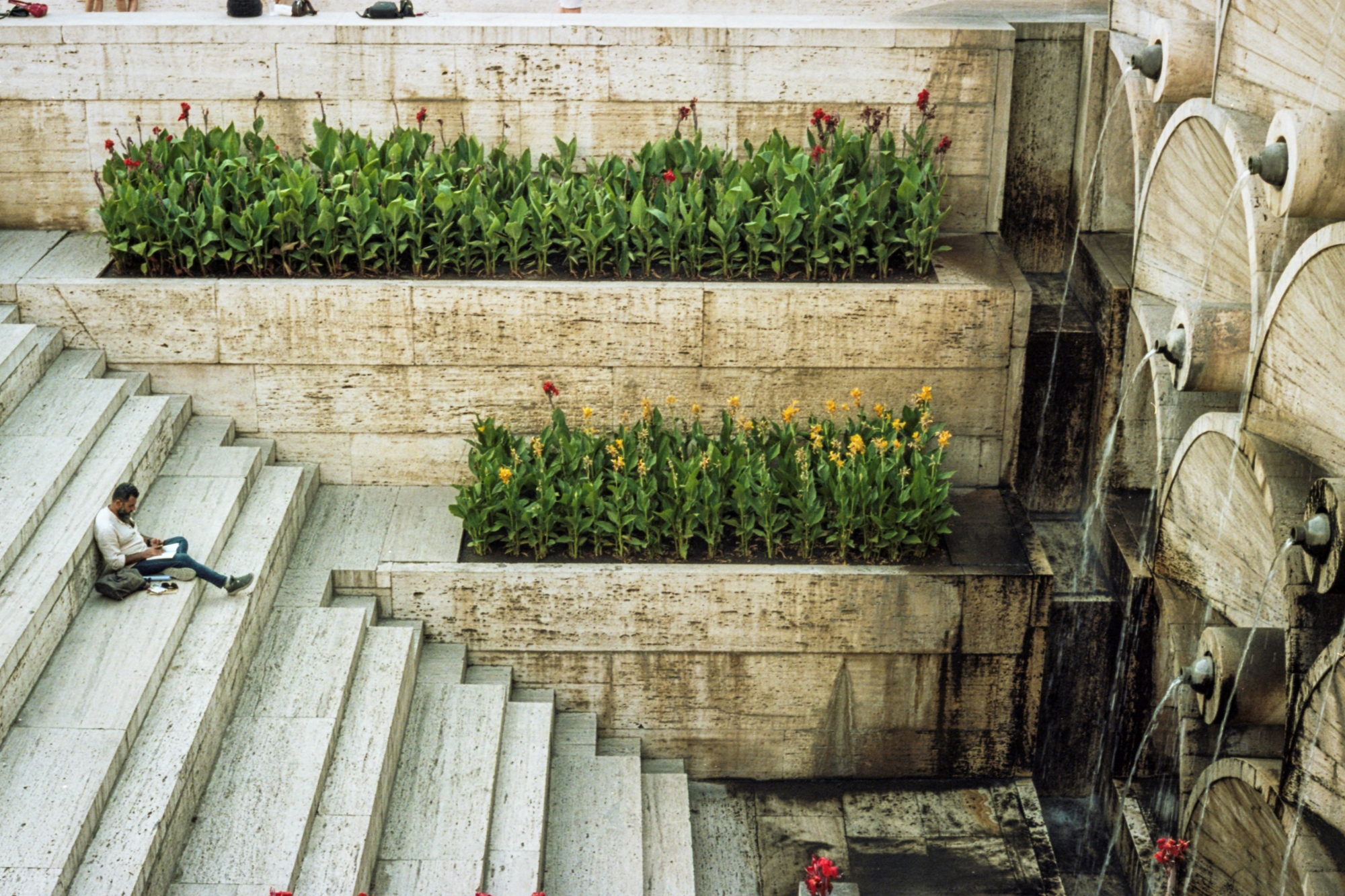
Yerevan. Part of the monumental Cascade complex. A grand example of Armenian Soviet architecture, construction began in 1971 as a connection between the city center and the northern districts. Still incomplete, it houses the Cafesjian Center for the Arts.
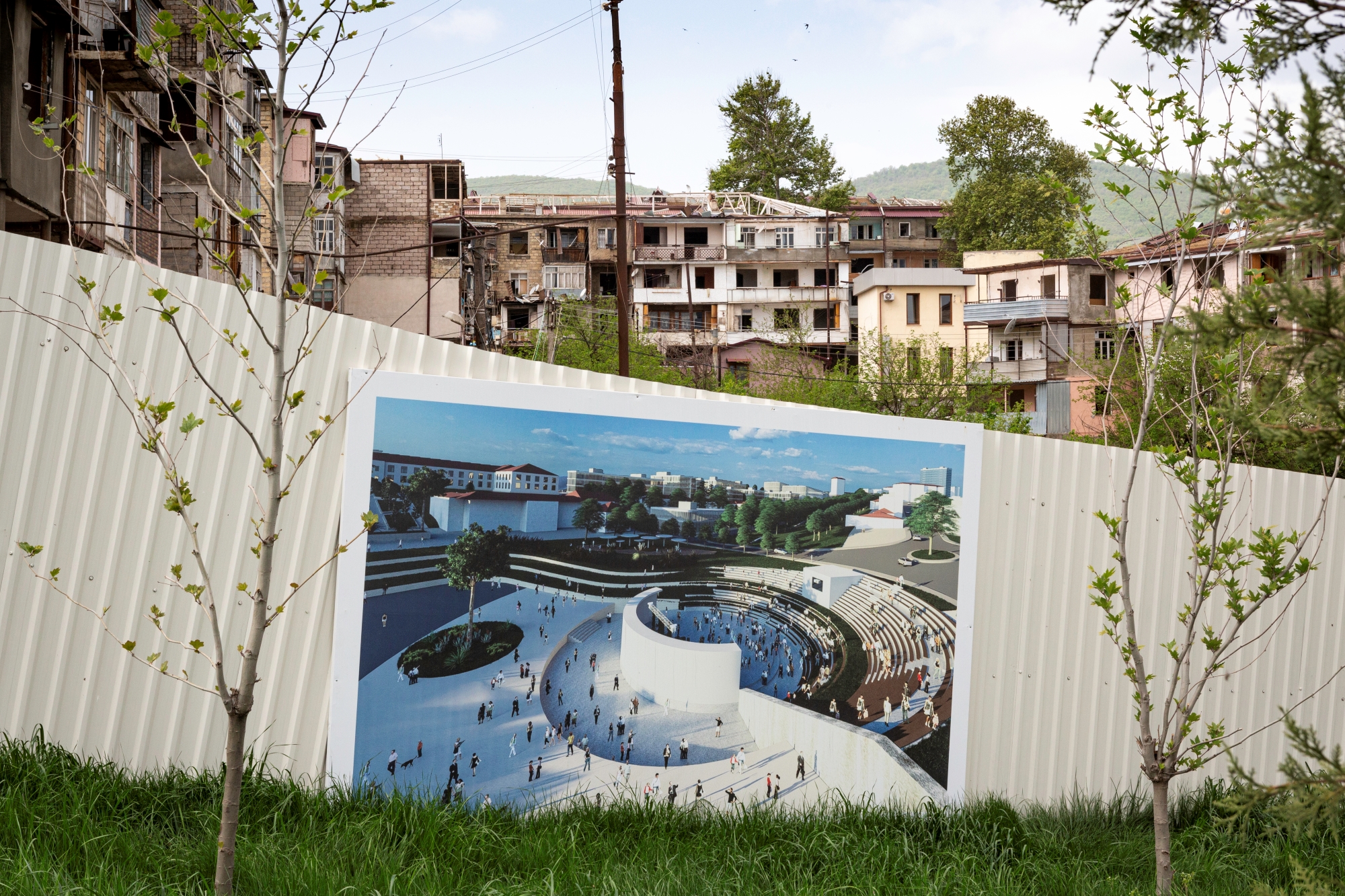
Khankendi. A rendering of the area surrounding the university. Many parts of the city, formerly entirely inhabited by Armenians, are currently undergoing reconstruction.
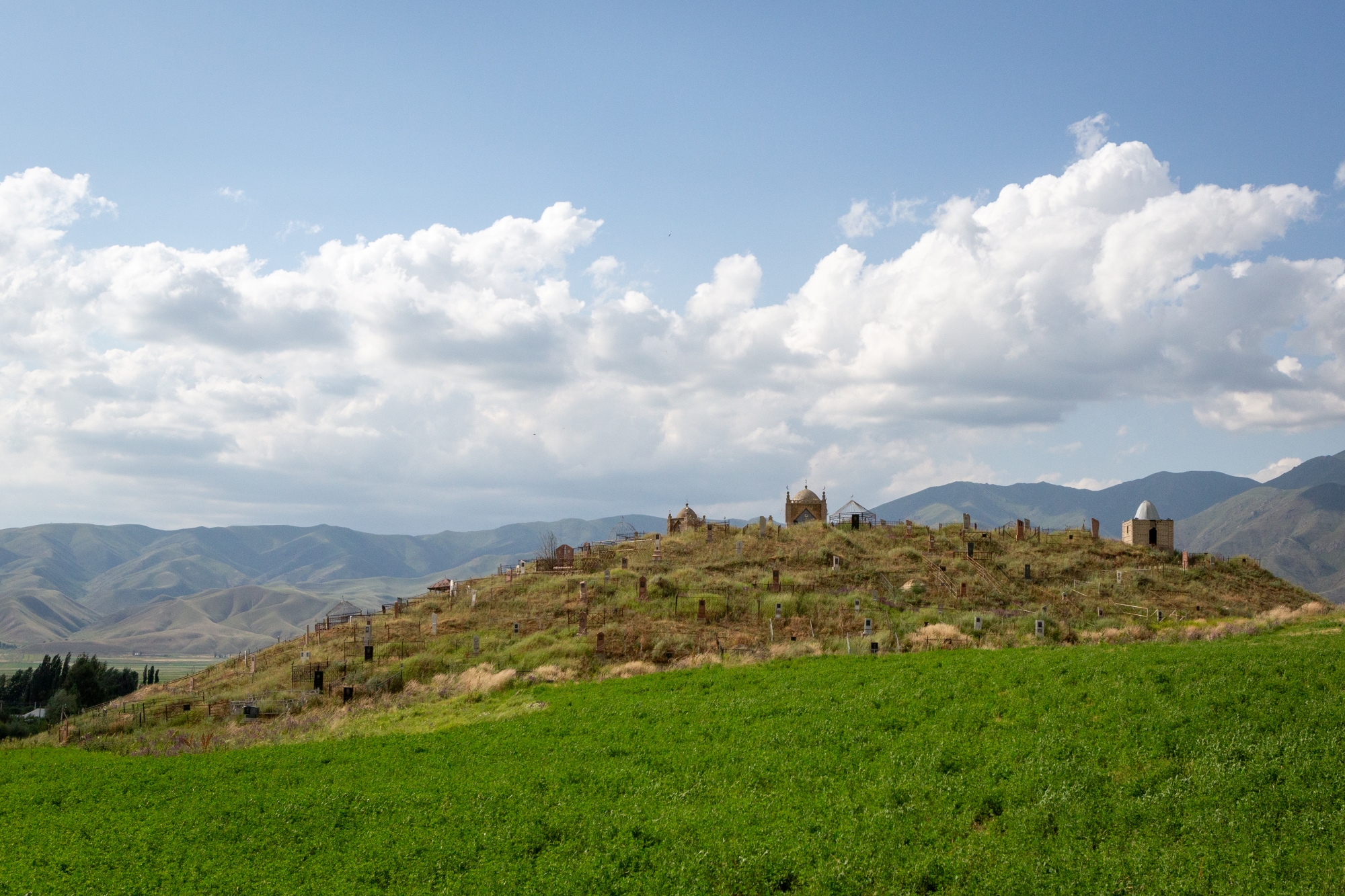
Shabdan, view of the Muslim cemetery.
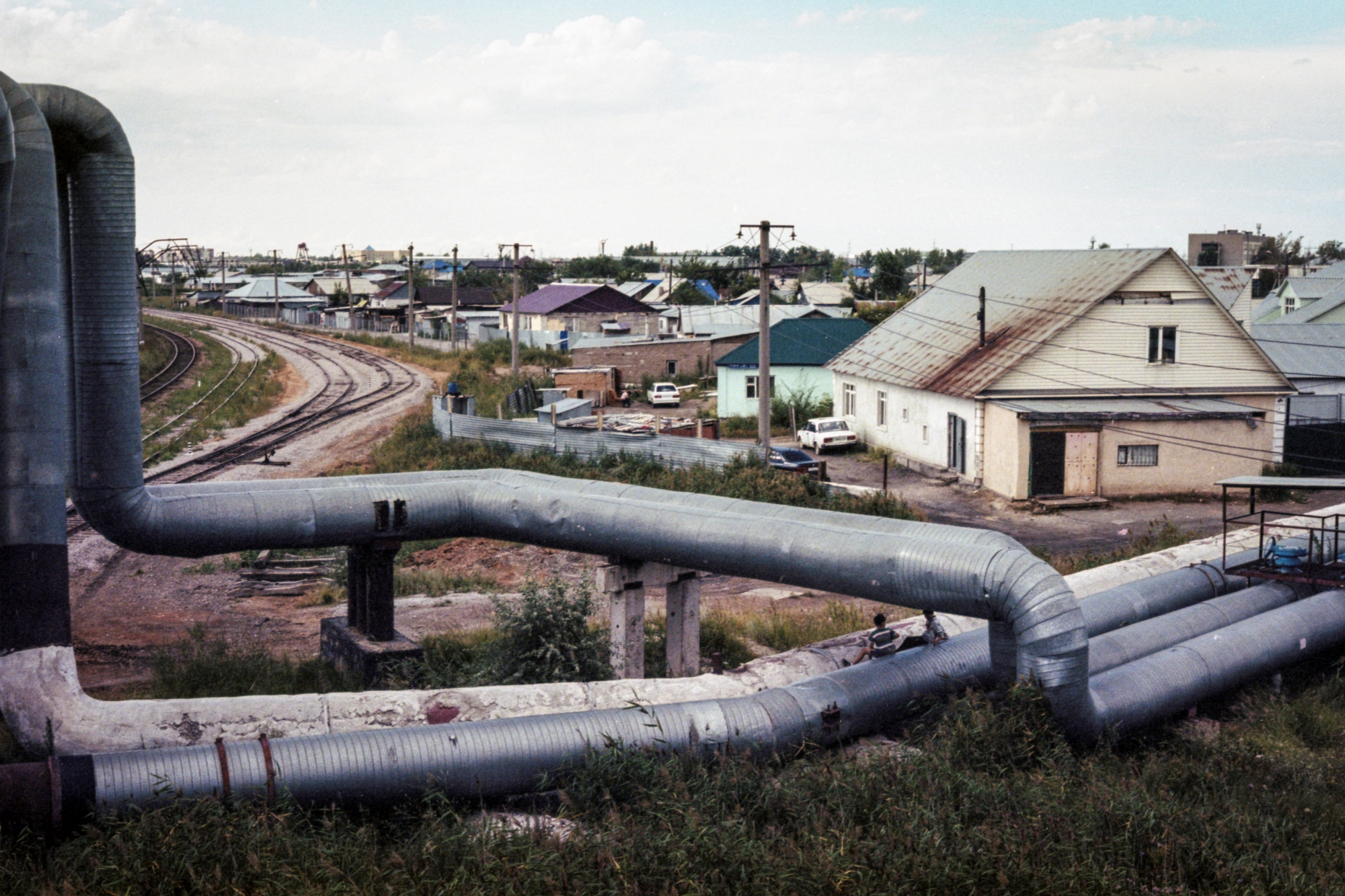
Astana. Two children play along the gas pipelines in the area of the old station.
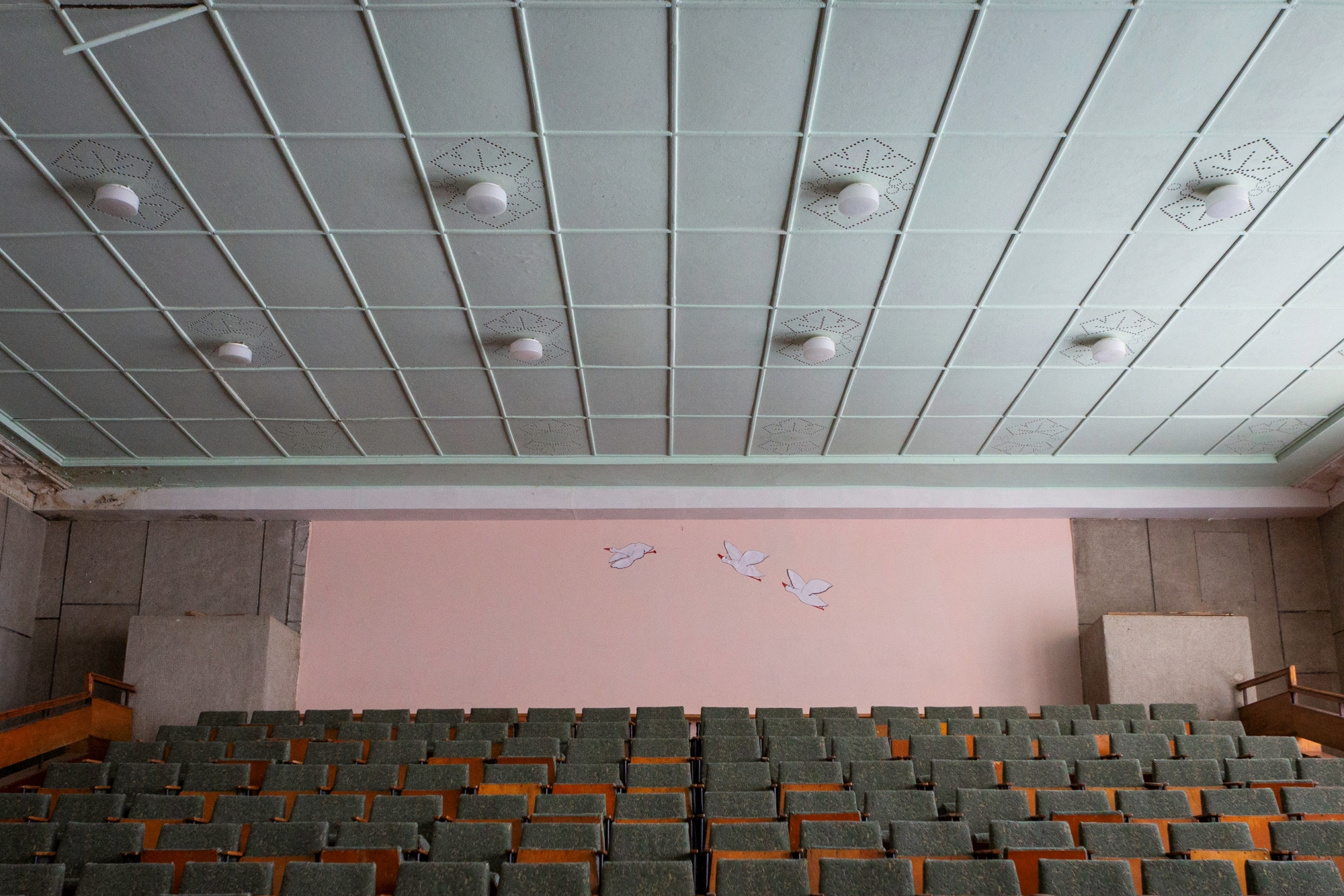
Ulmu. Interior detail of the House of Culture. Often in villages there are still no water supply networks or paved roads, yet there is always a House of Culture with a theater, a cinema, and a library inside. During the Soviet Union, the literacy rate was among the highest in the world.
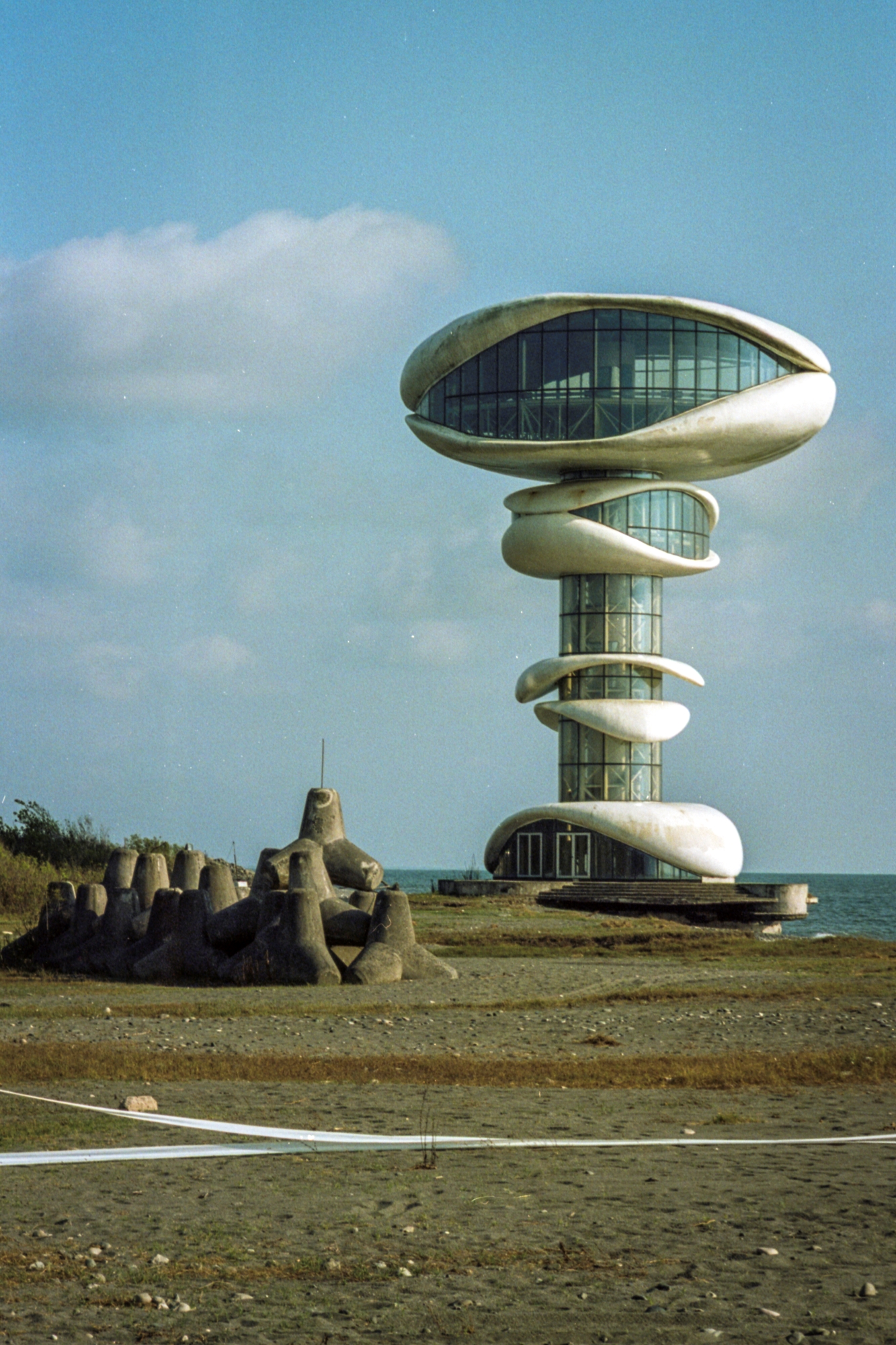
Anaklia. The panoramic tower, now abandoned, once housed a restaurant and a tourist information point.
Satellites is a series of photographs and diary fragments collected during journeys undertaken since 2018 in several countries of the former Soviet Union.
These are journeys made on foot, by car, by truck, and by train. They are travels through extraordinary brutalist and non-brutalist architecture, colorful and monumental Soviet mosaics, the vast yellow Kazakh steppes, the harsh yet beautiful Tian Shan mountains, the quiet plateaus of the Caucasus, the artificial desolation of the Aral Sea, the garish reconstruction of Qarabag, and the legendary quality of places that no longer exist — or that, in some way, exist forever.
These are nations that are becoming increasingly important in the global geopolitical landscape: emerging tourist destinations, spaces of frozen conflicts, nostalgia and evocative power, and a desire for redemption. Why speak about them? Out of interest, curiosity, and necessity.
Out of a desire to understand —just as it has been for me— what the Soviet Union truly was.
Born after its collapse, I have always wondered whether our vision — the Western one— corresponded to reality. Over years of reading and close observation, I discovered that it did not. With this exhibition, I recount the meaning and emotions of what I did, felt, sought, and saw: fragments of a world that no longer exists, what has changed, and what has remained. These countries are still searching for their own identity, along a path that each of us, individually, also travels.
Passing through them was also this.
This project is still a work in progress and expands every year. These images were taken between 2018 and 2025.
Satellites is, finally, a tribute to the work of the same name by Jonas Bendiksen, a Magnum photographer who inspired me and led me to further explore both the world of the former Soviet Union and the genre of contemporary reportage.


